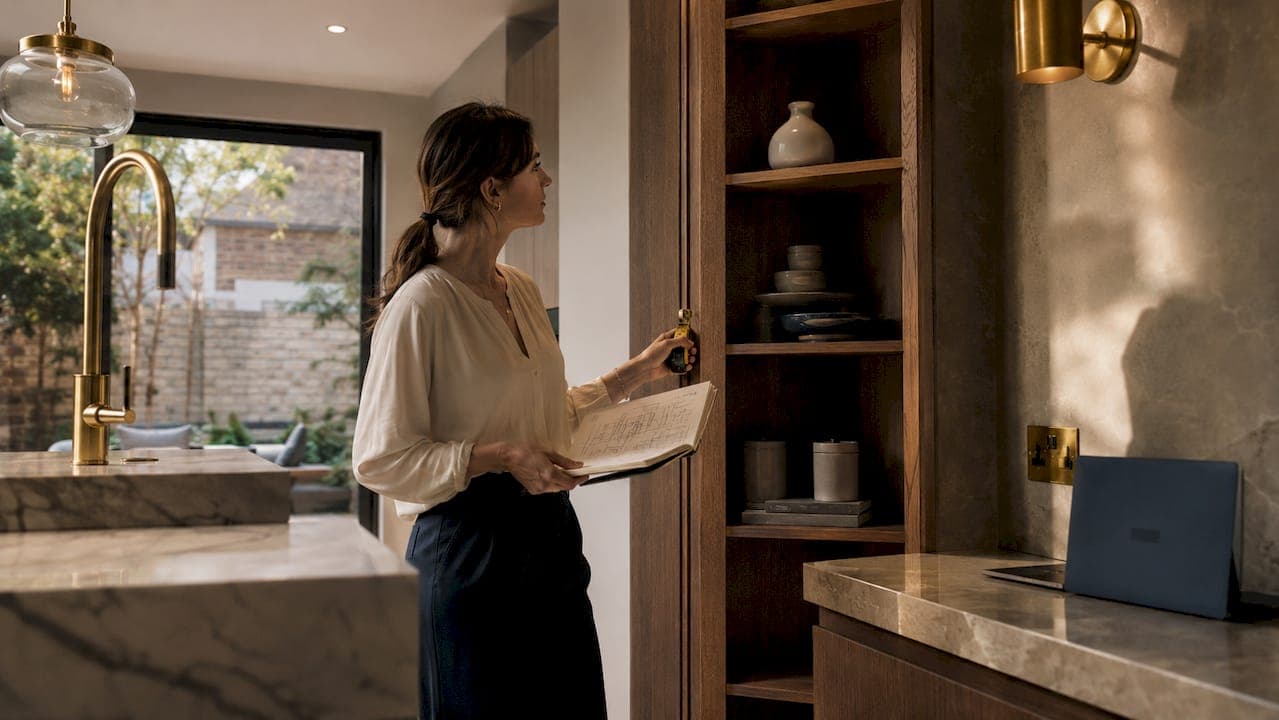
Bespoke furniture interior storage features are custom-designed elements built to maximise both function and visual appeal within your home. Unlike off-the-shelf units, these fitted solutions are measured and crafted to your exact space, habits, and aesthetic preferences. The industry term for this approach is made-to-measure joinery, and it covers everything from fitted wardrobes and alcove shelving to hidden compartments and integrated lighting. Bravo London has completed over 1,000 projects using this methodology, and each one carries a 10-year warranty. That track record tells you something important: quality bespoke storage is a long-term investment, not a quick fix.
1. What are bespoke furniture interior storage features?
Made-to-measure joinery is the practice of designing and building storage furniture to fit a specific room, wall, or architectural detail. Every dimension, material, and internal layout is chosen to suit your home rather than a factory average. The result is storage that feels intentional and balanced rather than added as an afterthought.
The key distinction from standard retail furniture is precision. A bespoke unit fills a recess completely, reaches the ceiling without a gap, and holds exactly what you need it to hold. High-quality bespoke furniture typically carries a 10-year warranty, which reflects the standard of craftsmanship involved. That warranty matters because it signals the maker stands behind the piece for the long term.
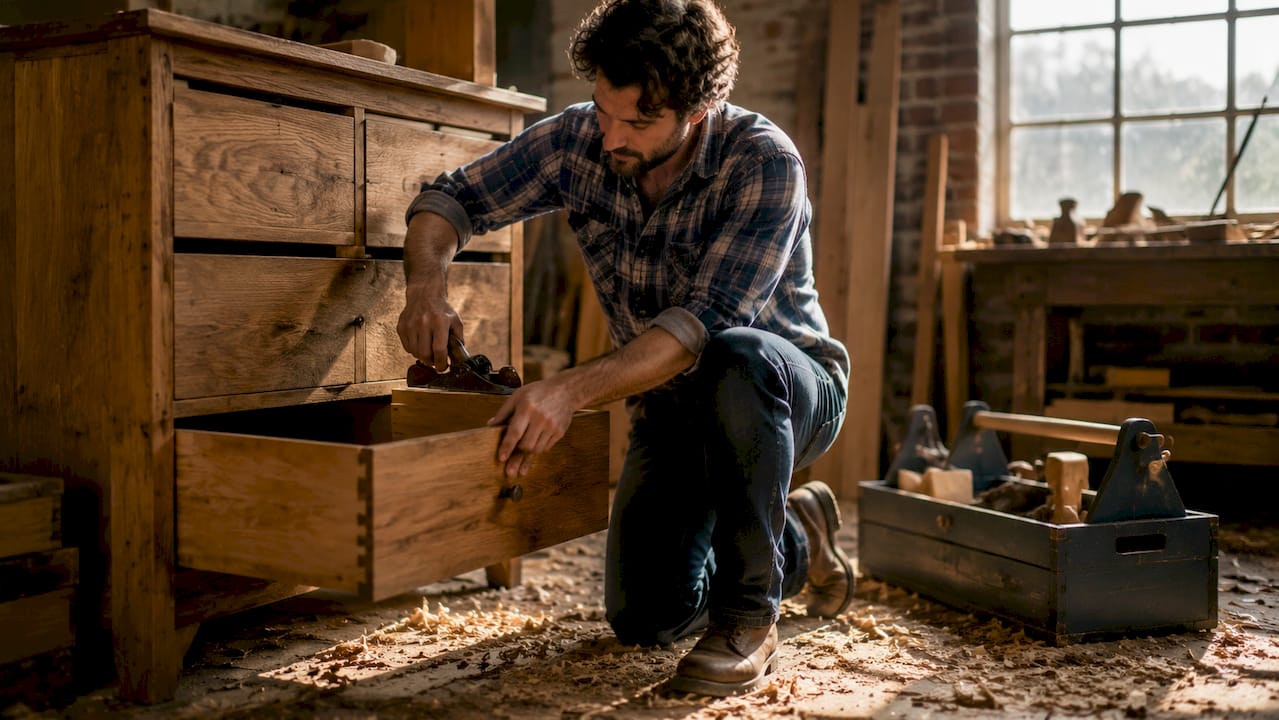
Bespoke storage also integrates with your daily routine. Drawer depths, shelf heights, and compartment widths are all matched to the objects you actually own. That level of detail is what separates a truly tailored interior from one that simply looks tidy.
2. Modular and reconfigurable bespoke storage systems
Modular bespoke storage gives you the flexibility of custom design without committing to a permanent layout. Units share a consistent footprint, which means you can stack, combine, and rearrange them as your needs change. Standard footprint dimensions such as W40 × D32 × H72cm allow units to mix and match without leaving awkward gaps.
The practical benefit is significant. You can add a new column of shelving when a room changes purpose, or reconfigure a home office into a bedroom storage wall without calling in a joiner. Modular systems allow full assembly in under 10 minutes using only the tools supplied. That speed makes modular bespoke storage particularly well suited to rented homes or rooms that evolve over time.
Handcrafted solid wood modular units also age well. The material develops character rather than deteriorating, and individual units can be replaced or extended without disrupting the rest of the installation.
- Consistent footprint dimensions allow stacking and mixing without specialist tools
- Rental-friendly reconfiguration means you can take the system with you when you move
- Solid wood construction holds fixings better than MDF and resists warping over time
- Expandable by design so you add units as your storage needs grow
Pro Tip: When planning a modular system, buy one or two extra units at the outset. Manufacturers occasionally discontinue finishes, and matching a new unit years later can be difficult.
3. Hidden and multifunctional storage features in bespoke furniture
The most space-efficient bespoke furniture does two jobs at once. A window seat stores bedding underneath. A bookcase conceals a home office behind a hinged panel. A kitchen island houses a pull-out larder on one side and a recycling station on the other. These multifunctional designs are where bespoke fitted storage earns its value most clearly.
Hidden compartments serve both practical and aesthetic purposes. Concealing a printer, a router, or a collection of cables behind a flush door keeps a room looking clean without sacrificing access. Appliance garages, which are enclosed sections of a kitchen worktop with a lift-up or tambour door, keep countertops clear while keeping appliances within reach.
Here are the most effective hidden and multifunctional storage features to consider:
- Concealed drawer beneath a bed platform for linen, seasonal clothing, or luggage
- Appliance garage with tambour door to hide kitchen appliances without unplugging them
- Bookcase with hinged panel that opens to reveal a home office or utility cupboard
- Ottoman or footstool with internal cavity for throws, games, or children's toys
- Media unit with cable management channels built into the back panel
- Bench seat with lift-up lid for hallway shoe and bag storage
- Secret drawer beneath a staircase tread for valuables or documents
Each of these features works because the storage disappears into the furniture's form. The room reads as calm and uncluttered, even when it holds a great deal.
4. Lighting and material combinations as part of bespoke storage design
Integrated lighting transforms a storage unit from a functional object into an architectural feature. Combining solid wood and steel with integrated LED lighting creates a strong visual impact that defines the character of a room. The light draws the eye to the unit's proportions, materials, and contents in a way that no overhead fitting can replicate.
Soft lighting within cabinetry accentuates curves, natural grain, and glass-fronted sections, creating a warm and considered ambience. This is particularly effective in living rooms and bedrooms, where the storage unit often occupies an entire wall. When lit correctly, the unit becomes the room's focal point rather than its background.
Material choices carry equal weight. Consider these combinations:
- Oak veneer with brushed brass handles for a warm, contemporary finish
- Painted MDF with integrated LED strip for a clean, gallery-style display
- Solid walnut with smoked glass panels for depth and visual contrast
- Steel frame with open shelving for an industrial character that ages well
- Lacquered finish with recessed lighting to create a flush, shadow-free appearance
The material you choose also affects durability. Solid wood holds fixings more reliably than veneered board, which matters when you are hanging heavy objects or fitting internal drawer runners. Choosing the right combination from the outset avoids costly replacements later.
5. Custom shelving, drawer interiors, and tailored compartments
Tailored interior storage is primarily valued for organisational efficiency, not luxury aesthetics. The real gain comes from matching drawer depths and shelf heights to the objects you use every day. A shallow drawer at eye level for jewellery trays takes seconds to navigate. A deep drawer at floor level for folded jumpers holds far more than a standard shelf.
Custom shelving designs include adjustable shelves, pull-out spice racks, jewellery trays, and dedicated compartments for tech accessories such as charging cables and headphones. Each of these features reduces the time you spend searching for things. That is a practical return on investment that compounds every day.
| Standard shelf unit | Tailored interior storage |
|---|---|
| Fixed shelf heights | Adjustable shelves to suit any object |
| Generic drawer depth | Drawer depth matched to contents |
| No internal dividers | Compartments for spices, jewellery, tech |
| One-size-fits-all width | Width matched to wall or recess |
| No cable management | Integrated channels for charging cables |
Pro Tip: Before briefing a designer, photograph the contents of every drawer and cupboard you currently own. That inventory tells the designer exactly what compartment sizes you need, and it prevents you from paying for storage you will never use.
6. How bespoke storage adapts to architectural challenges
Standard furniture cannot fill an alcove, follow a sloped ceiling, or wrap around a chimney breast. Bespoke units designed for irregular spaces eliminate the gaps, dead corners, and visual inconsistencies that off-the-shelf furniture leaves behind. The result is a room that reads as complete rather than assembled from parts.
Curved and angled designs are particularly effective in period properties, where walls are rarely perfectly square and ceilings often slope. A joiner working to exact site measurements can produce a unit that follows every contour, turning an awkward recess into the most useful storage in the house. Corner fitted wardrobes are a strong example: they recover space that a standard wardrobe simply cannot reach.
| Architectural challenge | Bespoke solution | Space recovered |
|---|---|---|
| Alcove beside chimney breast | Full-height fitted shelving | Floor to ceiling |
| Sloped loft ceiling | Angled unit following roofline | Full wall width |
| Curved external wall | Curved cabinet back panel | Entire recess |
| Under-stair void | Pull-out drawers and shelves | Previously unused |
| Narrow hallway | Slim-profile fitted storage | Full wall length |
Maximising vertical space is the single most effective way to increase storage capacity without extending a room's footprint. Floor-to-ceiling units in a standard bedroom can hold the equivalent of two or three freestanding wardrobes, while leaving the floor area completely clear.
Key takeaways
Bespoke furniture interior storage features deliver the most value when they are designed around your specific habits, objects, and architectural constraints rather than a generic room layout.
| Point | Details |
|---|---|
| Precision fit eliminates waste | Made-to-measure units fill every centimetre, including alcoves, slopes, and curved walls. |
| Modularity adds long-term flexibility | Standard footprint units can be reconfigured or extended without professional reinstallation. |
| Tailored interiors save daily time | Drawer depths and compartment sizes matched to your belongings reduce searching time significantly. |
| Lighting defines the room's character | Integrated LED within cabinetry turns a storage wall into an architectural focal point. |
| Warranty signals quality | A 10-year warranty on bespoke joinery reflects craftsmanship standards worth holding makers to. |
What I have learned from 1,000+ bespoke storage projects
Homeowners consistently underestimate how much of their frustration with a room comes from storage that does not fit their habits. They assume the problem is space. The real problem is almost always organisation. A room with half the square footage but storage designed around how you actually live will feel more functional than a large room with generic shelving.
The other thing I have seen repeatedly: people invest in beautiful materials and then specify the wrong internal layout. A stunning oak wardrobe with a single hanging rail and two shelves is no better than a flat-pack unit if your wardrobe is 80% folded clothing. The interior is where the real design work happens. Materials and finishes matter, but they come second.
My honest advice is to spend as much time on the internal specification as you do on the external finish. Ask your designer to show you the internal layout in detail before anything is built. If they cannot produce a clear drawing of every shelf, drawer, and compartment, that is a warning sign. The architectural impact of bespoke storage is real, but it only works when the functional brief is right first.
— Bravo
Bespoke storage solutions from Bravo London
Bravo London designs and builds made-to-measure storage for homeowners across London, from fitted wardrobes and alcove shelving to full-room cabinetry and bathroom furniture.
Every project is built to your exact measurements, with a 10-year warranty on craftsmanship and materials. Whether you need a tailored storage solution for an awkward alcove, a modular system for a home office, or a floor-to-ceiling wardrobe for a bedroom, Bravo London's team handles the design, manufacture, and installation. You can also view the full range of bespoke furniture to find the right starting point for your home. Book a free consultation and get a design that fits your space precisely.
FAQ
What are bespoke furniture interior storage features?
Bespoke furniture interior storage features are custom-designed elements, including shelving, drawers, compartments, and lighting, built to fit a specific room and the homeowner's daily habits. They differ from standard furniture by being made to exact measurements rather than factory averages.
How long does bespoke storage furniture last?
High-quality bespoke furniture typically carries a 10-year warranty, and solid wood construction means well-maintained pieces can last several decades. The durability depends on the materials specified and the quality of the joinery.
Can bespoke storage fit awkward spaces like alcoves or sloped ceilings?
Yes. Bespoke units are designed to follow irregular architectural features including alcoves, chimney breasts, curved walls, and sloped ceilings. This is one of the primary advantages over standard furniture, which leaves gaps and dead corners in these areas.
Is bespoke storage only for large homes?
Bespoke storage is particularly valuable in smaller homes, where every centimetre matters. Storage solutions for limited space show that tailored designs recover significantly more usable capacity than off-the-shelf alternatives in compact rooms.
What internal features should I prioritise in a bespoke wardrobe?
Prioritise drawer depths matched to folded clothing, adjustable shelves for varying item heights, and dedicated compartments for accessories. Customising your furniture around your actual wardrobe contents delivers far greater daily convenience than focusing on external finish alone.