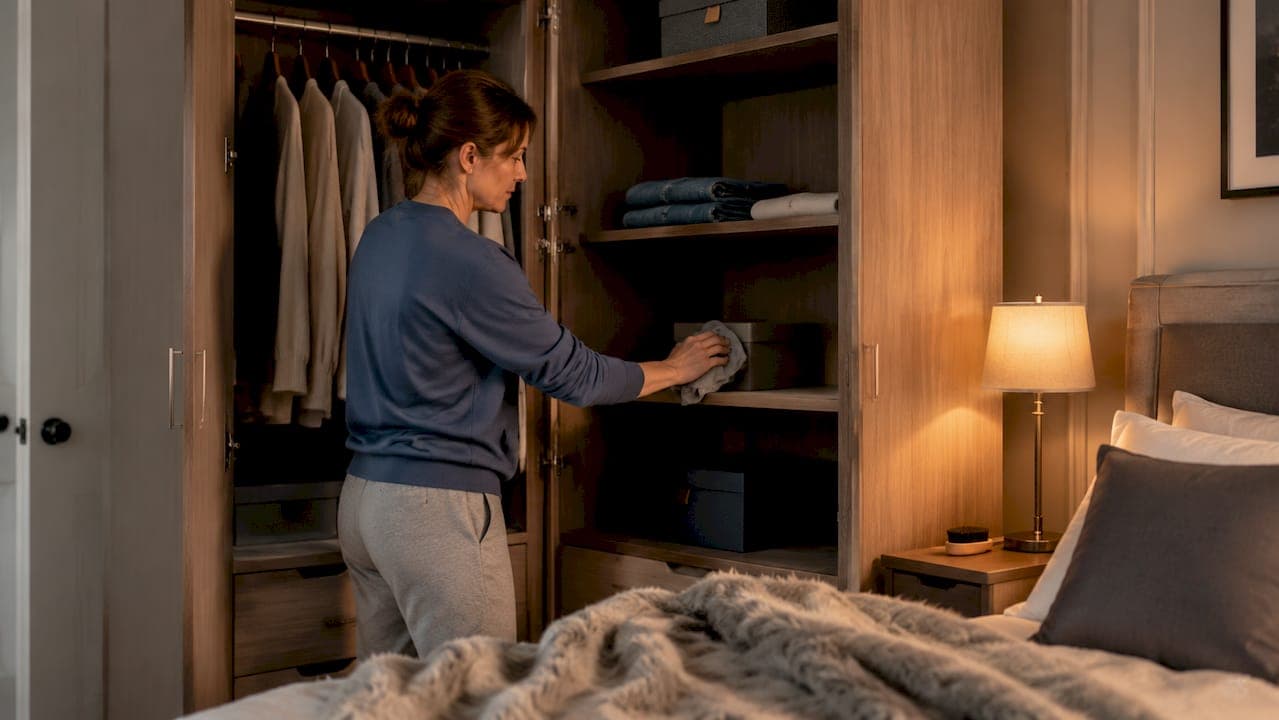
Cleaning and caring for fitted wardrobes is the single most effective way to extend their lifespan, protect their finish, and keep your storage organised long-term. Bespoke fitted wardrobes, the industry term for built-in, made-to-measure storage units, require a specific approach that differs from cleaning freestanding furniture. This guide covers the right tools, step-by-step techniques, moisture control, and regular upkeep routines that prevent mould, surface damage, and hardware failure. Whether you have veneered wood panels, mirrored sliding doors, or painted MDF interiors, the principles are the same: gentle products, consistent habits, and good airflow.
What tools and cleaning products are best for fitted wardrobes?
The best products for fitted wardrobes are mild, non-abrasive, and safe for a range of finishes including lacquered wood, glass, and painted surfaces. Harsh chemical sprays, bleach-based cleaners, and scouring pads all risk stripping protective coatings or leaving permanent marks on veneered finishes and soft-close drawer mechanisms.
The core toolkit for fitted wardrobe maintenance includes:
- Microfibre cloths for dusting and wiping surfaces without scratching
- A vacuum cleaner with a soft brush attachment for crevices, shelving edges, and the wardrobe base
- Mild washing-up liquid diluted in warm water for general surface cleaning
- A diluted white vinegar solution (equal parts vinegar and water) as a natural deodoriser and mould inhibitor
- Alcohol-based cleaner for metal hardware and glass panels
- Silicone spray or WD-40 applied sparingly to hinges and runners
Gentle cleaning products such as diluted vinegar, mild detergents, and alcohol-based cleaners prevent damage while inhibiting fungal growth on hard surfaces. This matters because fitted wardrobes often combine multiple materials in one unit, and a product safe for glass may not be safe for a waxed oak veneer.
| Product | Best used for | Precaution |
|---|---|---|
| Microfibre cloth | All surfaces, dusting | Rinse regularly to avoid redistributing dust |
| Diluted washing-up liquid | Painted MDF, shelves | Wring cloth out thoroughly before use |
| White vinegar solution | Mould-prone areas, odours | Do not use on natural stone or unsealed wood |
| Alcohol-based cleaner | Glass, metal hardware | Avoid contact with painted or lacquered panels |
| Silicone spray | Hinges, sliding door runners | Apply sparingly; wipe away excess immediately |
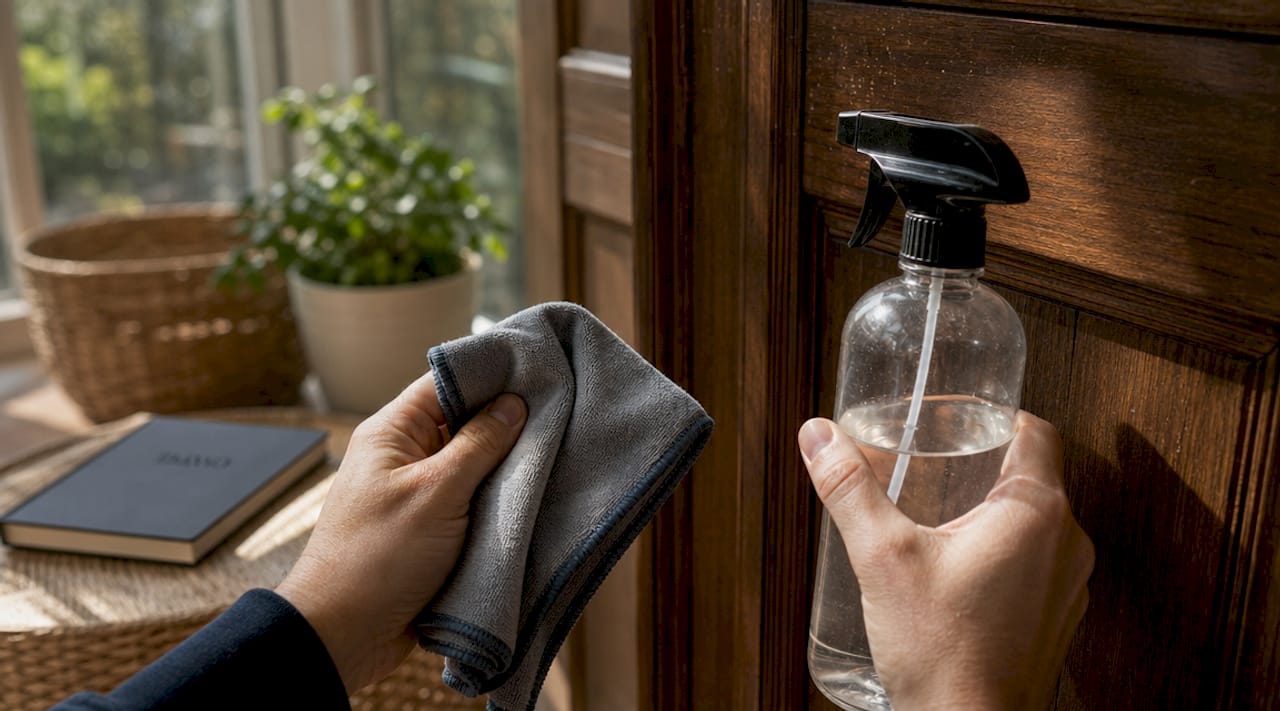
Pro Tip: Before using any new cleaning product on your wardrobe, test it on a small, hidden area first, such as the inside of a door panel or the back wall of a shelf. Wait five minutes and check for discolouration or surface changes before proceeding.
How to clean different parts of your fitted wardrobe effectively
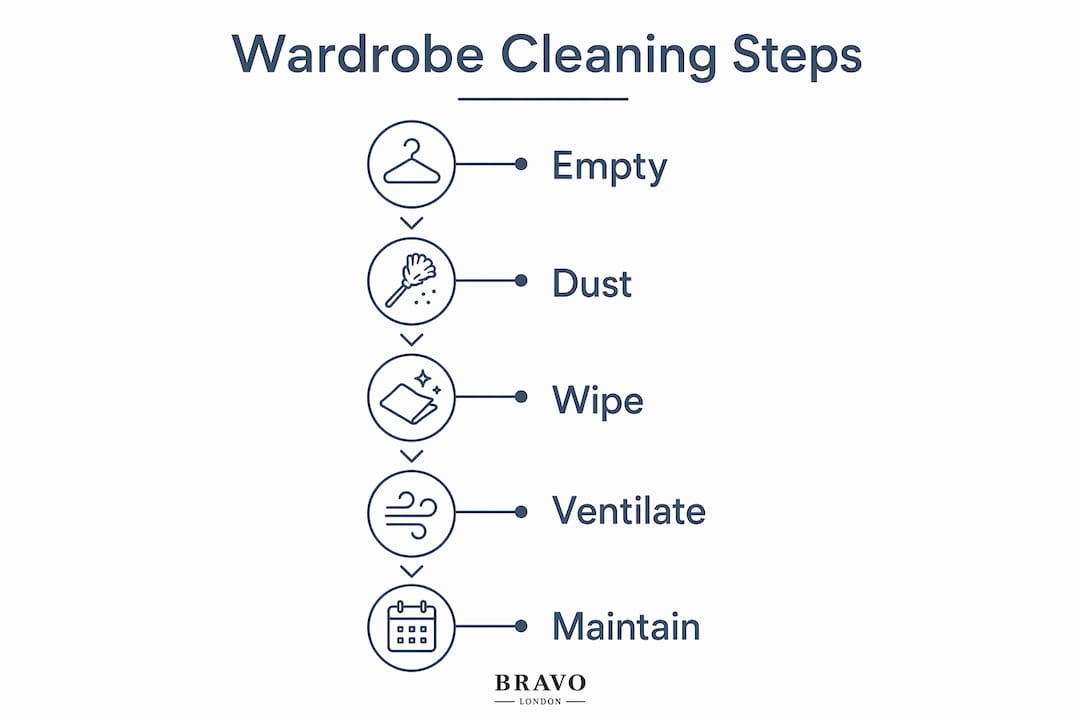
Effective wardrobe cleaning starts with emptying the unit completely. Returning items to a partially cleaned space defeats the purpose and reintroduces dust, fibres, and moisture. Use this as an opportunity to sort contents, setting aside anything that needs laundering before it goes back in.
Once empty, follow this sequence:
- Dust from top to bottom. Start with the highest shelves and work downward so falling debris does not re-contaminate cleaned surfaces. Use a dry microfibre cloth or a soft brush attachment on your vacuum.
- Vacuum crevices and corners. Vacuuming corners and shelves with a narrow attachment removes dust and fungi that contribute to mould growth and are difficult to reach with a cloth alone.
- Wipe interior surfaces. Use a cloth dampened with diluted washing-up liquid. Work in sections and rinse the cloth frequently. For wood panels and MDF shelving, avoid excessive water as it causes warping and finish damage. A damp cloth is sufficient; a wet one is not.
- Clean glass and mirrored doors. Apply an alcohol-based cleaner or a diluted vinegar solution to a microfibre cloth, then wipe the glass in straight strokes to avoid streaking. Never spray directly onto the glass if it is framed, as liquid can seep into the frame and damage the backing.
- Wipe down drawer interiors and bases. Drawers accumulate fine dust, fabric fibres, and occasionally moisture from damp clothing. Remove drawers if possible and wipe all surfaces, including the runners.
- Clean metal hardware. Handles, hinges, and rail brackets respond well to a cloth lightly dampened with an alcohol-based cleaner. Dry immediately to prevent water marks or oxidation.
- Dry all surfaces thoroughly. Leave the wardrobe open for at least 30 minutes before returning any items. This step is non-negotiable, particularly in rooms with limited ventilation.
A diluted vinegar solution of equal parts white vinegar and water acts as a natural deodoriser and inhibitor of mould spores when applied to interior surfaces. This is particularly useful for wardrobes built into external walls, which are more prone to cold spots and condensation.
How to prevent and manage mould or moisture in fitted wardrobes
Mould in fitted wardrobes is not primarily a cleaning problem. It is a moisture problem. Cleaning addresses mould symptoms, but without controlling humidity and airflow, it will return within weeks regardless of how thoroughly you scrub.
The key prevention strategies are:
- Store only fully dry clothing. Returning damp clothes to a wardrobe is the leading cause of mould re-infestation. Even slightly damp gym wear or towels can raise the internal humidity enough to trigger fungal growth within days.
- Leave space between garments. Recommended spacing of 5 to 10cm between items allows air to circulate freely. Overcrowding restricts airflow and creates the warm, still conditions mould thrives in.
- Use breathable storage solutions. Vacuum-sealed bags trap moisture if clothing is not completely dry. Breathable cotton garment bags protect against dust and pests without sealing in humidity. For clothes storage ideas that work with your wardrobe layout, breathable solutions are always the better choice.
- Open wardrobe doors periodically. Cross-ventilation, even for 15 to 20 minutes a day, significantly reduces moisture build-up inside enclosed units.
- Place moisture absorbers inside the wardrobe. Products such as DampRid or reusable silica gel sachets absorb excess humidity without any ongoing effort. Replace or recharge them every four to six weeks.
- Disinfect at the first sign of mould. Vacuum the affected area first to remove loose spores, then wipe with an alcohol-based cleaner or diluted vinegar solution. Wear gloves and a mask during this process.
Safety note: When cleaning visible mould, always ventilate the room by opening windows and wear protective gloves. Avoid scrubbing dry mould, as this releases spores into the air. Vacuum first, then wipe with a damp cloth and disinfectant solution.
If mould returns repeatedly despite these measures, the issue is likely structural. Condensation on external walls, inadequate room ventilation, or a poorly sealed wardrobe installation all require professional assessment rather than more frequent cleaning.
How can you maintain organisation and prolong fitted wardrobe life?
Regular fitted wardrobe upkeep is less about deep cleaning and more about consistent, light-touch habits that prevent problems from accumulating. A monthly routine takes under 20 minutes and makes a measurable difference to both the condition of the wardrobe and the ease of finding what you need.
- Monthly wipe-down. Run a dry microfibre cloth along shelves, rails, and the wardrobe base. This removes the fine dust layer that builds up between deeper cleans and keeps surfaces looking fresh.
- Seasonal declutter and airing. Emptying and airing wardrobes seasonally refreshes storage and reduces dust and moisture accumulation. The start of spring and autumn are natural points to do this, coinciding with a wardrobe changeover between seasonal clothing.
- Check and lubricate hardware. Lubricating hinges with silicone spray or WD-40 prevents squeaking and prolongs the life of door mechanisms. Check soft-close drawer runners at the same time. A drop of lubricant applied twice a year is enough for most fitted wardrobes.
- Avoid overcrowding rails. Overloaded hanging rails bend over time and put stress on the fixings that anchor the wardrobe to the wall. If a rail feels under strain, redistribute weight or add a second rail below.
- Inspect for surface damage. Minor chips or scratches on painted or veneered panels are worth addressing early. Touch-up pens matched to your wardrobe finish are available from most DIY retailers and prevent moisture from penetrating the surface layer.
Pro Tip: For walk-in wardrobe organisation, divide the space into zones by clothing type and frequency of use. Items used daily should be at eye level and within easy reach. Seasonal or rarely used pieces go on higher shelves or in lower drawers. This reduces the handling of the entire wardrobe during daily use, which in turn reduces wear on surfaces and hardware.
When hardware fails, doors warp, or surfaces show persistent damage despite regular care, professional refurbishment is the right call. Attempting to re-hang a misaligned door without the correct tools risks damaging the carcass. A bespoke furniture specialist can assess whether repair or replacement is the more cost-effective route.
Key takeaways
Effective fitted wardrobe care combines regular cleaning with consistent moisture control and hardware maintenance to prevent mould, surface damage, and structural wear.
| Point | Details |
|---|---|
| Use gentle products | Microfibre cloths, diluted vinegar, and mild detergents protect all finish types without causing damage. |
| Clean top to bottom | Always dust from the highest shelf downward and vacuum crevices before wiping surfaces. |
| Control moisture actively | Store only dry clothing, leave space between garments, and use breathable bags to prevent mould. |
| Lubricate hardware regularly | Apply silicone spray or WD-40 to hinges and runners twice a year to maintain smooth operation. |
| Air wardrobes seasonally | Empty and air the full unit at the start of spring and autumn to reduce dust and humidity build-up. |
What we have learned from over 1,000 fitted wardrobe projects
After working on more than 1,000 bespoke fitted wardrobe installations across London, the most consistent observation is this: the wardrobes that age poorly are almost never the ones with inferior materials. They are the ones that were never properly maintained after installation.
The most common mistake we see is treating the wardrobe interior as a sealed environment. Homeowners close the doors and assume the contents are protected. In practice, a closed wardrobe with no ventilation and tightly packed clothing is exactly the environment mould needs to establish itself. Opening the doors for a few minutes each day costs nothing and makes a genuine difference.
The second mistake is using the wrong cleaning products out of convenience. A multi-surface spray that works on kitchen worktops may contain solvents that dull a lacquered wardrobe panel over time. The damage is gradual and not obvious until the finish looks flat and worn. Mild, purpose-appropriate products take no more effort and preserve the finish for years longer.
From a practical standpoint, the wardrobes that stay in the best condition are the ones where the owner treats cleaning as part of a broader routine rather than a reaction to a visible problem. A quick monthly wipe takes minutes. Repairing warped panels or replacing mould-damaged shelving takes days and costs considerably more.
If your current wardrobe is making maintenance difficult, whether because of poor ventilation, inaccessible corners, or a layout that encourages overcrowding, that is worth addressing at the design stage rather than managing indefinitely with cleaning products.
— Bravo
Bespoke fitted wardrobes designed for easy care and lasting quality

A well-designed wardrobe is easier to clean, better ventilated, and built to last. Bravo London's bespoke fitted wardrobes are made to measure for your specific space, using materials and finishes selected for both their appearance and their durability. Every unit is designed with practical access in mind, making routine maintenance straightforward rather than a chore.
With over 1,000 completed projects, a 10-year warranty, and a design process tailored to your home's layout and your storage needs, Bravo London offers fitted wardrobe solutions that hold their quality over time. Explore corner fitted wardrobes and the full range of bespoke options to find the right fit for your home.
FAQ
What is the best way to clean the inside of a fitted wardrobe?
Empty the wardrobe completely, then dust from top to bottom using a microfibre cloth or vacuum with a soft brush attachment. Wipe all surfaces with a cloth dampened in diluted washing-up liquid, and dry thoroughly before returning any items.
How do you prevent mould in a fitted wardrobe?
Store only fully dry clothing, leave 5 to 10cm of space between garments for airflow, and open wardrobe doors periodically to ventilate the interior. Moisture absorbers such as silica gel sachets provide additional protection in humid rooms.
Can you use vinegar to clean wardrobe surfaces?
A solution of equal parts white vinegar and water is safe for most wardrobe interiors and acts as a natural deodoriser and mould inhibitor. Avoid using it on unsealed wood or natural stone surfaces.
How often should you clean a fitted wardrobe?
A light monthly wipe-down of shelves and surfaces is sufficient for regular upkeep. A full deep clean, including emptying the wardrobe and cleaning all interior panels, is recommended twice a year at seasonal changeovers.
When should you call a professional for wardrobe repairs?
If doors are misaligned, panels show persistent warping, or mould returns repeatedly despite regular cleaning, contact a bespoke furniture specialist. These issues often indicate structural or ventilation problems that cleaning alone cannot resolve.