
TL;DR:
- Bespoke furniture is custom-built from scratch to fit specific spaces and client preferences.
- The process involves four phases: consultation, design development, production, and installation.
Bespoke furniture is defined as furniture engineered and built from the ground up to fit a specific space, client, and brief. It differs fundamentally from customising a standard model. When you work with a bespoke furniture designer, you gain a piece that addresses your exact dimensions, storage needs, and aesthetic preferences. The result is not simply furniture. It is a considered, handcrafted addition to your home that feels intentional and balanced from day one. Bravo London has completed over 1,000 projects on this basis, and the process follows a clear, repeatable structure that any homeowner or renter can prepare for confidently.
What does it mean to work with a bespoke furniture designer?
Working with a bespoke furniture designer means commissioning a piece built from scratch around your specific space and requirements. This is not the same as choosing a colour or size from a manufacturer's catalogue. Every dimension, material, joint, and finish is decided in collaboration with you. The result is furniture that could not exist without your input.
The industry term for this process is "bespoke commissioning." It covers everything from the first conversation about your space to the final installation. Understanding this term helps you ask the right questions and set the right expectations before you begin.
Bespoke furniture also differs in its construction. Traditional joinery techniques such as mortise and tenon joints, dovetails, and hand-cut joints are standard practice. These methods produce furniture that outlasts flat-pack alternatives by decades. Custom finishes, including oils, stains, and lacquers, are applied at the end to protect and personalise the piece further.
What should you prepare before hiring a furniture designer?
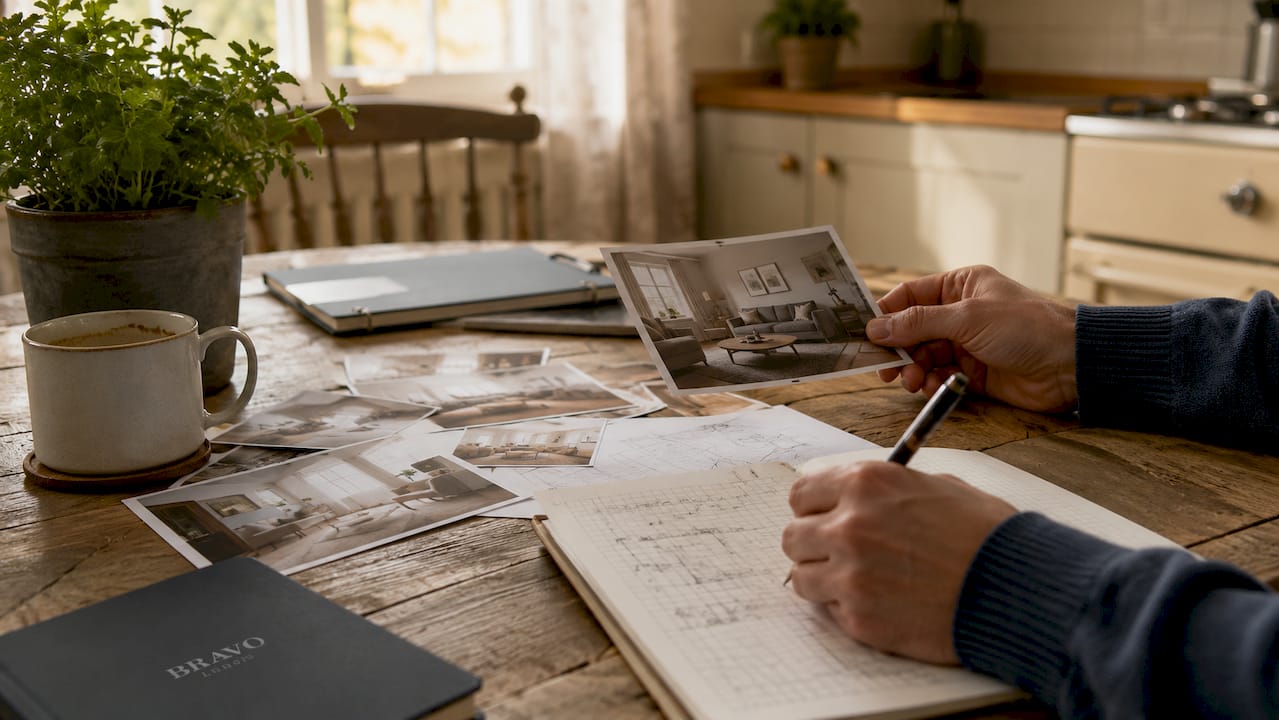
Preparation is the single biggest factor in how smoothly your project starts. The good news is that you do not need finished blueprints. Professional designers handle all technical drafting and material selection. What you do need is a clear picture of your space and your goals.
Gather the following before your first consultation:
- Rough measurements of the space, including height, width, and depth. A tape measure and a notepad are sufficient.
- Photographs of the room from multiple angles, including any awkward corners, alcoves, or sloped ceilings.
- Inspiration images from magazines, websites, or social media that reflect the style and finish you have in mind.
- A clear sense of your budget. Professional bespoke joinery and furniture projects in the UK range in value from £20,000 to £500,000 depending on scope. Knowing your range helps the designer propose realistic solutions from the outset.
- Your timeline. If you have a fixed deadline, such as a house move or a renovation completion date, share it immediately.
Budget and timeline are the two points most homeowners underestimate. A designer cannot work miracles with an unrealistic schedule, and a vague budget leads to proposals that miss the mark entirely.
Pro Tip: Collect at least five to ten inspiration images before your consultation. Designers read visual references far faster than written descriptions, and a clear mood board cuts the concept development phase significantly.
How does the bespoke furniture design process unfold?
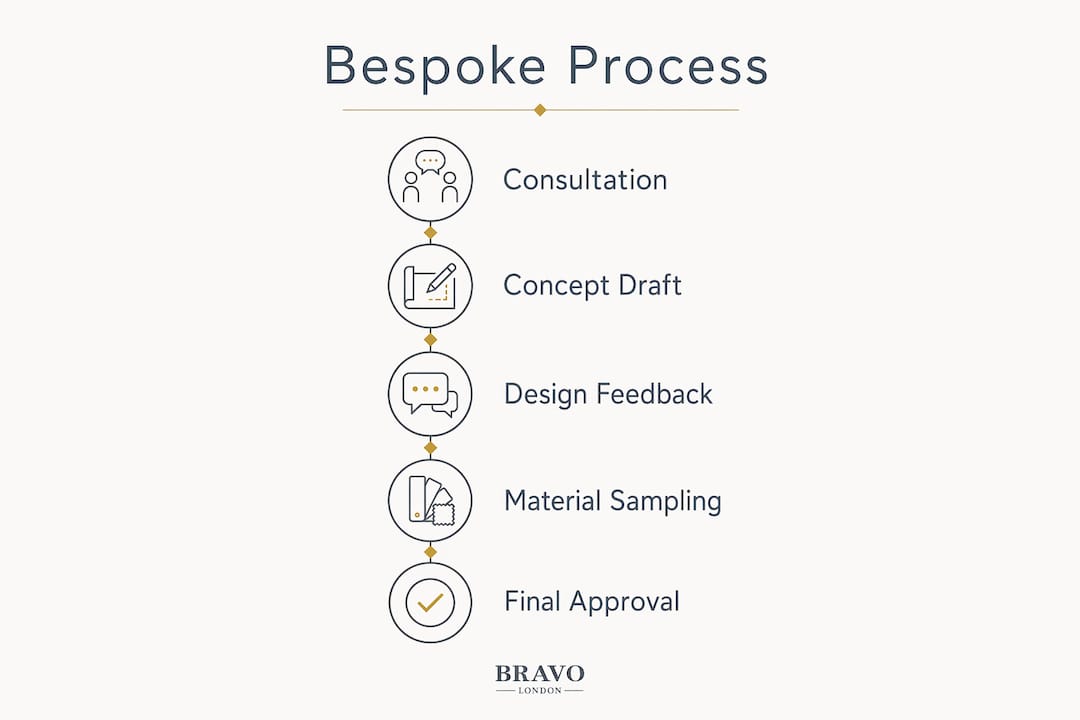
The commissioning process follows four distinct phases. Each phase has a clear purpose, and understanding them helps you stay engaged without feeling lost.
-
Initial consultation and brief (weeks 1–3). You meet with the designer, share your measurements, photos, and inspiration images, and discuss your functional requirements. The designer asks questions about how you use the space, what you need to store, and what aesthetic you are aiming for. A clear brief produced at this stage accelerates rendering and reduces costly revisions later.
-
Concept development and design rendering (weeks 3–7). The designer produces technical drawings and visual renders of the proposed piece. This phase acts as engineering validation, confirming that proportions, material transitions, and functional tolerances all align before a single piece of timber is cut. You review the renders, request adjustments, and agree on materials and finishes.
-
Proposal, specifications, and agreement. Once the design is approved, the designer produces a detailed specification document and a formal quote. Read this carefully. It should list every material, finish, dimension, and fitting. Sign off only when you are satisfied with every detail.
-
Production, delivery, and installation (weeks 4–16+). The piece moves into the workshop. You receive updates at agreed intervals. Delivery and installation typically take one to three days, depending on the complexity of the piece.
The feedback loop in phase two is where the collaboration is most active. Ask questions about every decision. Clients who ask about joinery choices, material properties, and finish options consistently report higher satisfaction with the finished piece.
Pro Tip: Request a physical material sample before approving the final specification. Colours and textures read differently on screen than they do in your home under natural light.
What is the timeline for a bespoke furniture project?
Timeline expectations are the area where most homeowners are caught off guard. Standard bespoke furniture commissions require a lead time of 9–14 weeks. Larger structural projects need 14–16 weeks or more. The total project from first consultation to installation typically runs three to six months.
| Project type | Typical lead time | Notes |
|---|---|---|
| Small commission | 9 weeks minimum | Simple pieces, limited joinery |
| Standard order | 9–14 weeks | Most fitted furniture and cabinetry |
| Large structural piece | 14–16+ weeks | Floor-to-ceiling units, complex joinery |
| Full room installation | 3–6 months total | Includes all design and production phases |
Production time is not simply delay. Wait times in production are necessary for material acclimatisation, precision handcrafting, and finishing processes that require curing for long-term durability. Rushing this phase produces inferior results.
Seasonal order volumes also affect your schedule. Quieter months such as june, july, and january allow faster project starts and shorter lead times. If you have a fixed deadline, plan backwards from that date and add a buffer of at least two weeks for unforeseen adjustments.
Pro Tip: If you need furniture ready for a specific date, such as a Christmas gathering or a house move, book your consultation at least five to six months in advance. Studios fill their order books quickly during peak periods.
How do you avoid common pitfalls in bespoke furniture collaboration?
Most problems in bespoke furniture projects trace back to three avoidable causes: an unclear brief, an unrealistic timeline, and inflexible specifications after production has started.
- Unclear briefs produce designs that miss the mark. The more specific your brief, the fewer revision rounds you need. Share your inspiration images, describe how you use the space daily, and be honest about your budget ceiling.
- Unrealistic timelines create pressure that affects craftsmanship. If a studio quotes 12 weeks and you push for six, something has to give. Either the quality suffers or the scope shrinks. Accept the timeline the designer proposes, or adjust your deadline.
- Late specification changes are expensive. Once production starts, altering dimensions or materials means scrapping work already completed. Finalise every detail before you sign off on the specification document.
- Poor communication during production leads to surprises at installation. Agree on a check-in schedule with your designer. A brief update every two to three weeks keeps you informed without disrupting the workshop.
- Ignoring the sculptural and spatial form of a piece is a missed opportunity. Bespoke furniture can address awkward angles, low ceilings, and irregular walls in ways that standard furniture cannot. Bring these challenges to your designer early rather than treating them as obstacles.
The most rewarding collaborations share one quality: the homeowner stays curious throughout. Ask about the joinery. Ask why a particular timber was chosen. Ask how the finish will age. Clients who engage actively with these questions deepen the collaboration and consistently report greater satisfaction with the outcome. The bespoke process is a partnership, and your input shapes the result at every stage.
Key takeaways
Successful bespoke furniture collaboration depends on clear preparation, realistic timelines, and active engagement throughout the design and production process.
| Point | Details |
|---|---|
| Preparation before consultation | Bring rough measurements, photos, inspiration images, a budget range, and your deadline. |
| No blueprints required | Designers handle all technical drafting; your visual references and brief are sufficient to start. |
| Four-phase process | Consultation, concept development, production, and installation each have a defined purpose and duration. |
| Realistic timeline | Standard orders take 9–14 weeks; full projects run three to six months from brief to installation. |
| Active collaboration wins | Asking questions about materials, joinery, and finishes improves outcomes and reduces costly revisions. |
What working with bespoke designers has taught me
The homeowners who get the most from a bespoke commission are rarely the ones with the biggest budgets. They are the ones who arrive prepared and stay engaged. I have seen beautifully detailed briefs from renters working with modest budgets produce results that outshine far larger projects where the client handed over a vague idea and expected magic.
The thing most people do not anticipate is how much they learn about their own home during the process. Sitting with a designer and working through how a space is actually used, not just how it looks, changes the way you think about every room. That conversation about whether you need deep shelving or shallow, open storage or concealed, is not a design question. It is a question about how you live.
Flexibility matters more than most homeowners expect. The best outcomes I have seen come from clients who trusted the designer's material recommendations even when their initial instinct pointed elsewhere. A veneered oak finish in a north-facing room will always outperform a painted white surface for warmth and longevity. That kind of knowledge is what you are paying for.
The timeline can feel long, particularly if you are excited about the result. But the wait is the work. Every week in production is a craftsperson applying skill that a factory line cannot replicate. When the piece arrives and fits your space as though it was always there, the timeline becomes irrelevant.
— Bravo
Bravo London's bespoke furniture services
Bravo London brings over 1,000 completed projects and a 10-year warranty to every commission. Whether you need a fitted wardrobe for an awkward alcove or a full living room installation, the process starts with a consultation that puts your space and brief at the centre.
Bravo London's bespoke furniture range covers everything from initial design through to craftsmanship and installation, with transparent timelines and clear specifications at every stage. The team handles all technical drafting, material sourcing, and finishing, so you arrive at the consultation with nothing more than your measurements, photos, and ideas. For homeowners who want to see the full range of materials and finishes available, the luxury furniture collection is a strong starting point. Book a consultation and bring your brief.
FAQ
What is bespoke furniture commissioning?
Bespoke furniture commissioning is the process of designing and building a piece from scratch to fit a specific space and client brief. It differs from customising a standard model because every dimension, material, and joint is decided collaboratively.
How long does a bespoke furniture project take?
Standard bespoke furniture orders take 9–14 weeks from brief to delivery, with larger structural projects requiring 14–16 weeks or more. Full projects including all design phases typically run three to six months.
Do I need technical drawings before contacting a designer?
No. Photos, rough measurements, and inspiration images are sufficient to begin a bespoke furniture collaboration. The designer produces all technical drawings and specifications as part of the design process.
How much does bespoke furniture cost in the UK?
Professional bespoke furniture and joinery projects in the UK range from £20,000 to £500,000 depending on scope and complexity. Sharing your budget range at the first consultation helps the designer propose realistic solutions.
When is the best time to commission bespoke furniture?
Quieter months such as june, july, and january offer faster project starts and shorter lead times due to lower studio order volumes. For fixed deadlines, book your consultation at least five to six months in advance.