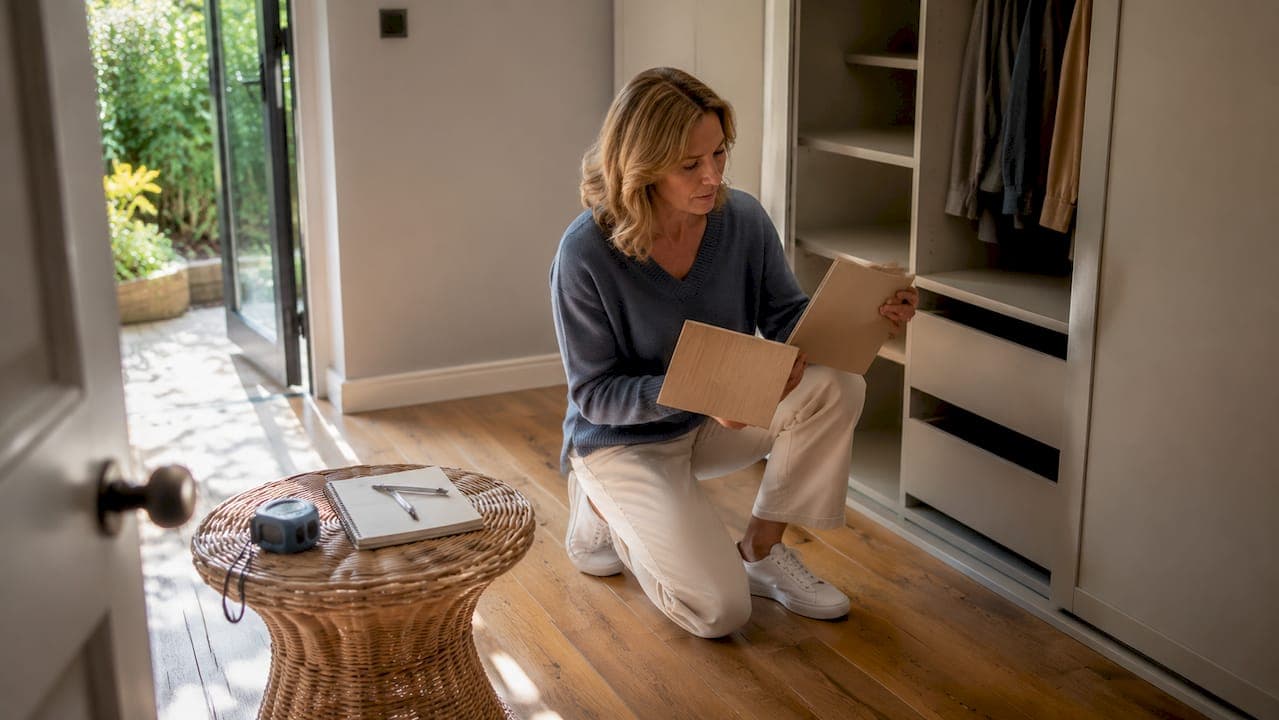
Long lasting fitted wardrobe materials are defined by two structural layers: a stable engineered core, typically 18mm cabinet-grade plywood, and a durable surface finish such as veneered MDF or high-pressure laminate (HPL). Choosing the right combination determines whether your fitted wardrobe lasts a decade or begins failing within three years. Experts at Murano Cabinet confirm that plywood outperforms MDF and particleboard for structural elements due to its superior moisture resistance and screw-holding capacity. The industry term for this approach is "engineered core construction," and it is the standard used by professional cabinet makers and bespoke furniture specialists alike. Get this decision right at the planning stage, and your wardrobe will remain solid, straight, and functional for many years to come.
1. What are the top long lasting fitted wardrobe materials?
The six core materials used in fitted wardrobes each serve a different structural or aesthetic purpose. Understanding what each one does well, and where it falls short, is the foundation of any good specification.
Plywood
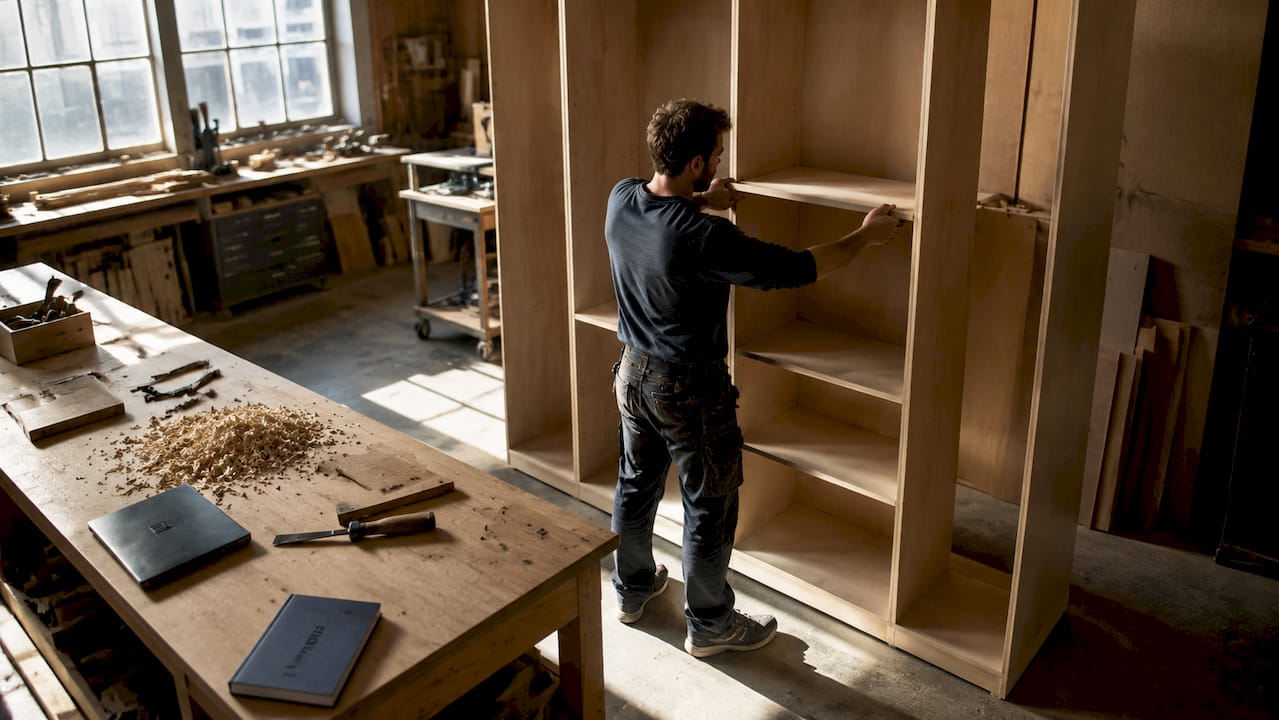
18mm cabinet-grade plywood is the benchmark for carcasses and shelves. Its cross-grain layered construction resists moisture swelling and holds screws firmly, which matters enormously when you are hanging heavy doors or loading shelves with folded clothing. Baltic birch plywood rated AA/BB grade has a tangential shrinkage of under 0.5%, meaning it warps far less than solid wood or generic plywood over time.
MDF (medium-density fibreboard)
MDF is isotropic, meaning it has no grain direction. That property prevents paint from cracking as the board expands and contracts, making it the preferred choice for painted wardrobe doors. However, MDF must be moisture-resistant (MR-grade) in bedrooms adjacent to en-suite bathrooms, or it will swell and deform within a few years.
Melamine-faced chipboard and HPL
Melamine-faced chipboard is the most common material in budget fitted wardrobes. It is affordable and easy to maintain, but its low density makes it vulnerable to sagging and hinge failure under heavy loads. HPL (high-pressure laminate) is a significant step up: at over 0.6mm thickness, it offers genuine scratch and impact resistance suitable for high-traffic wardrobes.
Solid wood
Solid wood carries strong aesthetic appeal and commands a premium price. The practical drawback is expansion and contraction with seasonal humidity changes, which can cause doors to stick or gaps to appear. Most professional cabinet makers use solid wood for decorative elements rather than structural carcasses.
Metal frames and glass
Powder-coated steel frames paired with glass panels suit contemporary, open-plan wardrobe designs. They are durable and corrosion-resistant, though they offer no insulation and require precise installation to avoid rattling.
Material comparison at a glance:
| Material | Strength | Moisture resistance | Best use |
|---|---|---|---|
| Cabinet-grade plywood | Excellent | Good | Carcasses, shelves |
| MR-grade MDF | Good | Moderate (MR grade) | Painted doors, panels |
| HPL on MDF/chipboard | Moderate | Good (surface only) | Doors, drawer fronts |
| Melamine chipboard | Low | Poor | Budget interiors |
| Solid wood | Variable | Poor | Decorative trims |
| Powder-coated steel | Excellent | Excellent | Frames, open designs |
Pro Tip: Always specify the grade of plywood in your contract. "Plywood" without a grade specification can mean anything from structural softwood to cabinet-grade Baltic birch. The difference in longevity is substantial.
2. How do finishes and edge banding affect wardrobe longevity?
The surface finish and edge sealing of a wardrobe panel matter as much as the core material itself. Most wardrobe failures within three years result from poor edge sealing and low-quality hardware, not from the core board failing. That finding should change how you evaluate quotes.
Edge banding
Exposed panel edges are the primary entry point for moisture. 2mm ABS or PVC edge banding applied to all exposed edges creates a physical barrier against moisture infiltration. Laser edge banding goes further: it uses no adhesive at all, fusing the banding directly to the panel through heat. This eliminates the glue line that moisture typically tracks along, extending the life of MDF and particleboard cores considerably.
Surface finishes
For painted doors, factory-applied waterborne acrylic or polyurethane paints on MDF produce a finish that resists yellowing and cracking far better than on-site painting. UV-cured lacquers add another layer of durability, particularly in rooms with strong natural light. Water-based sealers applied to interior surfaces and back panel edges prevent moisture absorption from the inside of the wardrobe, a step that many installers skip entirely.
Hardware specifications
Hinges and drawer slides carry load ratings that must match the weight of your doors and drawers. Requesting technical datasheets for all hardware before installation is not excessive; it is the standard practice in commercial cabinetry. Soft-close hinges rated for doors above 20kg, and full-extension drawer slides with corrosion-resistant coatings, are the minimum specification for a wardrobe expected to last a decade or more.
Pro Tip: Ask your installer specifically about laser edge banding. It costs marginally more than standard ABS banding but removes the single most common cause of early panel failure in fitted wardrobes.
- Specify 2mm ABS or PVC edge banding on all exposed edges as a contractual minimum
- Request laser edge banding for panels in humid rooms
- Confirm factory-applied finishes rather than on-site painting wherever possible
- Obtain hardware datasheets showing load ratings for hinges and drawer slides
- Insist on full sealing of interior surfaces, back panel edges, and undersides
3. Which material combinations best balance durability, cost, and climate?
The most durable fitted wardrobes use a plywood carcass with veneered or lacquered MDF doors. This combination gives you structural rigidity where it matters most and a stable, paint-friendly surface for the visible elements. It is also the combination that Bravo London specifies most frequently across its 1,000-plus completed projects.
Avoiding particleboard in humid environments
Cheap particleboard has a density of 30–40 lb/ft³, which makes it prone to sagging under heavy loads and vulnerable to hinge failure over time. In bedrooms with en-suite bathrooms or poor ventilation, particleboard panels can begin swelling within 18 months. Selecting MR-grade MDF or plywood for these environments is a straightforward way to avoid an expensive replacement.
Shelf span and support
Standard 18mm shelves without intermediate support will sag over spans greater than 900mm. Baltic birch plywood is the preferred material for long shelves because its high elasticity modulus reduces deflection under heavy loads. For shelves carrying shoes, folded jumpers, or storage boxes, adding a central support or specifying 25mm plywood is a practical solution that costs very little at the design stage.
Scenario comparison
| Scenario | Recommended core | Recommended surface | Key consideration |
|---|---|---|---|
| Dry bedroom, standard use | Plywood or MDF | Veneered or lacquered MDF | Standard edge banding sufficient |
| Bedroom with en-suite | MR-grade MDF or plywood | HPL or lacquered MDF | Laser edge banding recommended |
| High-traffic family wardrobe | Plywood | HPL | Specify corrosion-resistant hardware |
| Budget build | Melamine chipboard | Melamine | Accept shorter lifespan; plan to replace |
| Luxury or walk-in wardrobe | Baltic birch plywood | Solid wood veneer or HPL | Full interior sealing required |
Pro Tip: Balancing cost and climate is the key decision. A high-density engineered core with a good factory finish will outlast a premium material that is poorly sealed or installed. Spend the budget on the finish and hardware, not just the board.
4. What should you demand from your wardrobe installation?
Treating your fitted wardrobe project like a commercial fit-out is the single most effective way to protect your investment. Demanding precise contracts with finishing and hardware specifications reduces early replacement and repair risks significantly. Here is what to insist on before signing anything.
- Written material specification. The contract must name the exact board type, grade, and thickness for every component, including carcass panels, shelves, doors, and back panels.
- Edge banding standard. Specify 2mm ABS or PVC banding as the minimum, with laser edge banding required for any panels in humid zones.
- Factory finish confirmation. Confirm that doors and drawer fronts receive factory-applied paint or lacquer, not on-site brush or roller finishes.
- Hardware datasheets. Request manufacturer datasheets for all hinges, drawer slides, and runners, showing load ratings and corrosion resistance classifications.
- Interior surface sealing. All interior surfaces, back panel edges, and the undersides of shelves must be sealed before installation.
- Approval samples. Request physical samples of the board, finish, and edge banding before production begins. Approve in writing.
- Soft-close and full-extension hardware. Specify soft-close hinges and full-extension drawer slides as standard, not optional upgrades.
Pro Tip: If a supplier cannot provide hardware datasheets or refuses to specify materials in writing, treat that as a clear signal about the quality of their installation. Professional cabinet makers provide this information as standard practice.
5. How to choose wardrobe materials for your home's specific conditions
Your home's humidity, the weight of what you plan to store, and your aesthetic preferences all shape the right material choice. There is no single correct answer, but there is a logical process for arriving at the right one for your situation.
Start by assessing the room's humidity. Bedrooms with en-suite bathrooms, ground-floor rooms, or rooms in older properties with limited ventilation are higher-risk environments for moisture damage. In these spaces, MR-grade MDF or plywood is the correct core choice, and laser edge banding is worth the additional cost.
Next, consider your storage load. Heavy items such as shoes, handbags, and folded knitwear place significant stress on shelves. If you are planning a walk-in wardrobe design with long shelf runs, specify Baltic birch plywood and add intermediate supports for any span over 900mm.
Then match the surface finish to your aesthetic and maintenance preferences:
- Painted MDF doors suit contemporary interiors and are easy to touch up, but require factory application for lasting results
- Veneered wood surfaces add warmth and a natural feel, and work well in traditional or transitional bedroom styles
- HPL laminated surfaces are the most practical choice for high-traffic wardrobes, offering scratch and impact resistance with minimal upkeep
- Solid wood trims add character without the structural risks of an all-solid-wood build
Budget is the final variable. A plywood carcass with HPL doors sits at a mid-range price point and delivers excellent longevity. A melamine chipboard build costs less upfront but typically requires replacement or significant repair within five to seven years. For guidance on choosing the right wardrobe for your home's specific layout and conditions, a consultation with a bespoke designer is time well spent.
Key takeaways
The most durable fitted wardrobes combine a plywood carcass with properly sealed, factory-finished MDF or HPL doors, specified in writing before a single panel is cut.
| Point | Details |
|---|---|
| Plywood is the best structural core | Use 18mm cabinet-grade or Baltic birch plywood for carcasses and shelves. |
| Edge sealing prevents most failures | Specify 2mm ABS banding or laser edge banding on all exposed panel edges. |
| Factory finishes outperform on-site work | Waterborne acrylic or polyurethane factory paints resist yellowing and cracking far longer. |
| Avoid particleboard in humid rooms | Low-density chipboard swells and causes hinge failure; use MR-grade MDF or plywood instead. |
| Contracts must specify everything | Name every material, grade, finish, and hardware rating in writing before production begins. |
What I have learned from 1,000-plus wardrobe projects
The question I hear most often from homeowners is: "Does the material really make that much difference?" After completing over a thousand fitted wardrobe projects at Bravo London, my honest answer is yes, but not always in the way people expect.
The core board matters, but the edge sealing and hardware matter just as much. I have seen beautifully specified plywood carcasses fail within four years because the installer left the back panel edges unsealed and the hinges were rated for doors half the weight they were carrying. Conversely, I have seen well-sealed MR-grade MDF wardrobes in humid bedrooms still performing perfectly after eight years.
The insight that most homeowners miss is this: the quality of a fitted wardrobe is determined at the specification stage, not the installation stage. By the time the panels arrive on site, the decisions that will define the wardrobe's lifespan have already been made. That is why I always encourage clients to spend time on the contract and the sample approval process, not just the door style and colour.
My personal preference for most UK bedrooms is a Baltic birch plywood carcass with lacquered MDF doors, laser edge banding throughout, and soft-close hardware rated well above the actual door weight. It is not the cheapest combination, but it is the one I would put in my own home. And for clients with en-suite bedrooms or older properties with variable humidity, I would not specify anything less.
— Bravo
Build your wardrobe on a foundation that lasts
If you are ready to move from research to reality, Bravo London designs and builds bespoke fitted wardrobes using the exact material combinations and specifications described in this guide. Every project begins with a detailed consultation to assess your room's conditions, storage needs, and aesthetic preferences.
Bravo London specifies cabinet-grade plywood carcasses, factory-applied finishes, and laser edge banding as standard, not as premium upgrades. With a 10-year warranty and over 1,000 completed projects across London, you can be confident that the wardrobe you commission will still be performing a decade from now. Explore Bravo London's luxury wardrobe options or book a free design consultation to discuss your project in detail.
FAQ
What is the most durable material for a fitted wardrobe?
Cabinet-grade plywood is the most durable core material for fitted wardrobe carcasses and shelves, offering superior moisture resistance and screw-holding strength compared to MDF or particleboard.
Why do fitted wardrobes fail early?
Most fitted wardrobes fail within three years due to poor edge sealing and low-quality hardware rather than the core board itself. Specifying 2mm ABS or laser edge banding and rated hardware prevents the majority of early failures.
Is MDF suitable for fitted wardrobes?
MDF is suitable for wardrobe doors and panels when moisture-resistant (MR) grade is specified and factory-applied finishes are used. Standard MDF without proper sealing will swell in humid bedrooms.
How do I prevent wardrobe shelves from sagging?
Use 18mm Baltic birch plywood for shelves and add intermediate supports for any span over 900mm. Standard 18mm shelves without support will deflect under heavy loads over time.
What should a fitted wardrobe contract include?
A fitted wardrobe contract should specify the exact board type, grade, and thickness for every component, the edge banding standard, the finish type and application method, and hardware load ratings confirmed by manufacturer datasheets.