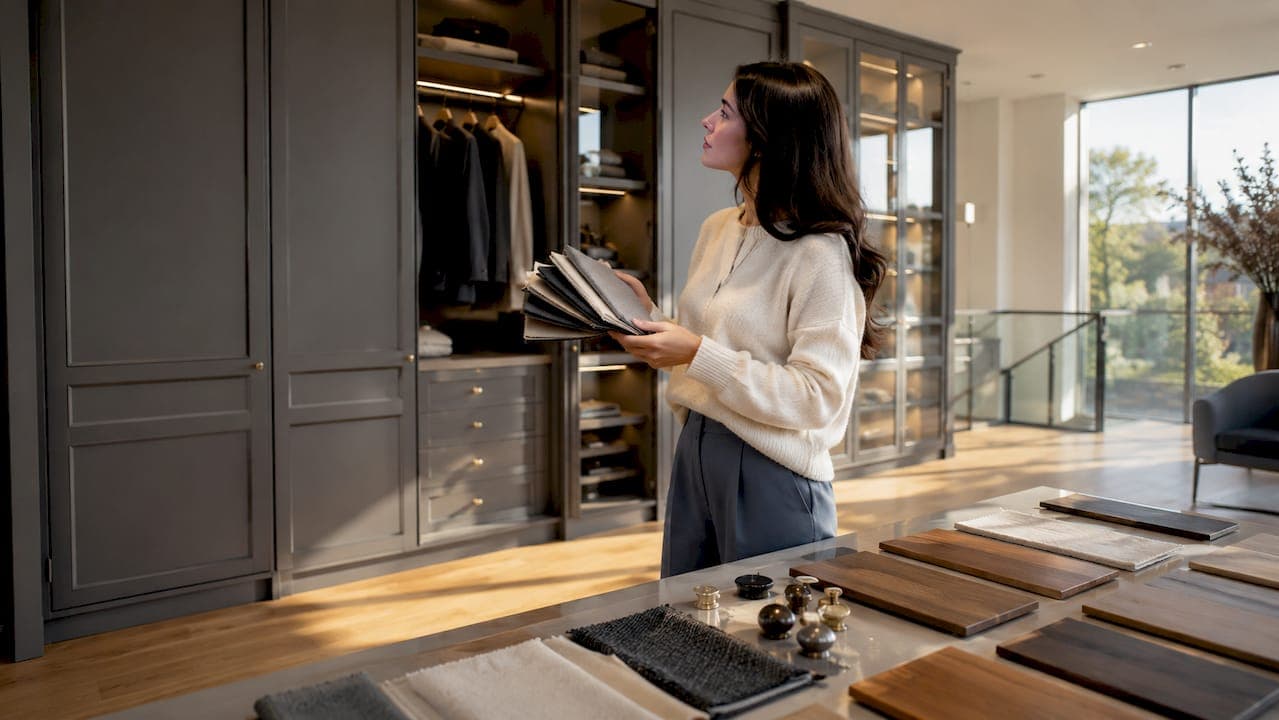
A fitted furniture showroom visit is the process whereby you explore, assess, and co-design made-to-measure storage solutions in a specialist physical space, guided by expert consultants. Unlike browsing a catalogue or scrolling product pages, this experience gives you direct access to real materials, working mechanisms, and professional design tools. For anyone considering bespoke fitted furniture for a bedroom, living room, or bathroom, the showroom visit is where vague ideas become concrete, costed plans. Bravo London, with over 1,000 completed projects, treats the showroom appointment as the foundation of every successful installation.
What happens during a fitted furniture showroom visit?
A showroom consultation is a structured, collaborative session. It is not a sales pitch. The goal is to translate your spatial challenges and aesthetic preferences into a workable design brief.

Appointments typically last 30–90 minutes, depending on project complexity. A straightforward fitted wardrobe for a standard bedroom sits at the shorter end. A full home office with integrated shelving, cabinetry, and a desk configuration will take longer. Either way, the time is used productively.
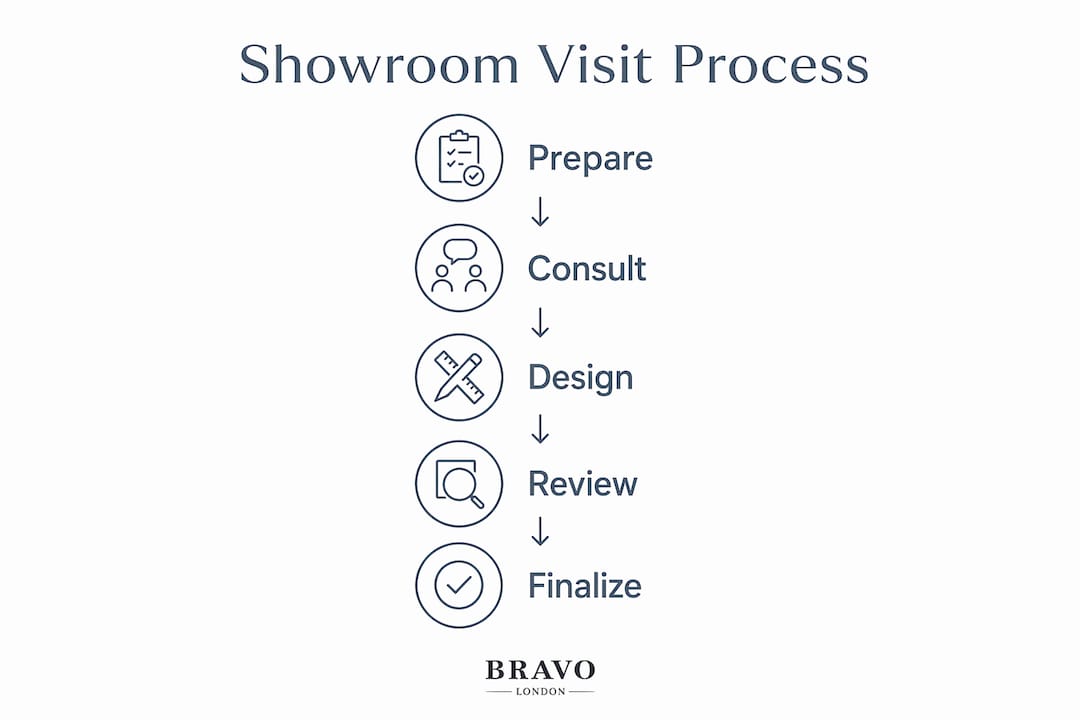
Here is what a typical visit looks like, step by step:
- Welcome and brief. A design consultant introduces the showroom, explains the process, and asks about your project. They want to understand your space, your storage habits, and your style preferences before showing you anything.
- Material and finish exploration. You handle physical samples of door fronts, carcass materials, veneered finishes, and painted options. Colours and textures that look identical online often read very differently in person.
- Mechanism testing. You open drawers, test soft-close hinges, and operate sliding door systems. Testing drawer glides and soft-close hinges in person is the only reliable way to assess build quality. This single step separates professional-grade fitted furniture from mass-market alternatives.
- 3D design collaboration. Using your rough measurements and photos, the consultant builds a preliminary 3D layout on screen. You see your space take shape in real time and can request changes immediately.
- Scope and budget discussion. The consultant outlines configuration options at different price points, so you leave with a realistic sense of what is achievable.
Pro Tip: Bring your phone fully charged. You will want to photograph samples, colour combinations, and the 3D layouts the consultant creates during your session.
Showroom vs online shopping: why in-person wins for fitted furniture
Online research is a useful starting point. It is not a substitute for a showroom visit when you are making a significant, permanent investment in your home.
The core limitation of online shopping for fitted furniture is sensory. Colour perception differs significantly between a screen and a real environment. A finish that reads as warm white on a product page can appear cool grey under your home's lighting. Showrooms allow you to compare finishes side by side under both natural and ambient light, which is the only accurate way to make a colour decision.
Scale is the second problem. Seeing furniture in a real setting clarifies size relationships and design flow in a way that online dimensions simply cannot. A wardrobe described as 2,400mm tall sounds large on paper. Standing next to a floor-to-ceiling display unit makes the reality of that height immediately clear.
Here is what a showroom gives you that online research cannot:
- Tactile quality assessment. You feel the weight of a door, the smoothness of a drawer pull, and the solidity of a carcass. Digital images create illusions; physical inspection reveals how materials actually respond to handling.
- Expert guidance on configuration. Clients frequently leave showroom visits with improved plans that better suit their lifestyle and space constraints than their original ideas.
- Discovery of unforeseen needs. The key value of a showroom visit is often the surfacing of questions you did not know to ask. A consultant might identify that your alcove wardrobe would benefit from internal lighting, or that a pull-out trouser rack fits where you assumed only shelves would work.
- Cohesive design schemes. Showrooms curate collections to demonstrate how pieces work together, giving you confidence in combinations you might not have considered independently.
"Visitors often discover better furniture configurations during showroom interactions than from online images alone. Showrooms help pivot from initial 'screenshot' ideas to functional, expert-guided solutions." — Holcombe Interiors
For fitted furniture purchases, showroom visits significantly reduce post-purchase regret through tactile and ergonomic verification. That matters when you are commissioning furniture built into the fabric of your home.
How to prepare for a fitted furniture showroom appointment
Good preparation turns a productive visit into an excellent one. You do not need professional drawings or precise technical plans before you arrive.
Expert designers prefer rough measurements and photos over professional plans for initial consultations. Precise measurements come later, after the design is agreed. Knowing this removes a common barrier. Many homeowners delay booking a showroom visit because they assume they need to hire a surveyor first. You do not.
What you should bring:
- Room dimensions. Measure wall lengths, ceiling height, and note the positions of windows, doors, radiators, and sockets. A rough sketch on paper is perfectly adequate. For guidance on taking accurate room measurements, Bravo London's resource covers exactly what to record.
- Photographs. Take photos of the current space from multiple angles, including any awkward corners, sloped ceilings, or alcoves. These give the consultant immediate spatial context.
- Inspiration images. Screenshots from Pinterest, Houzz, or magazine features help the consultant understand your aesthetic preferences quickly. Do not worry if your inspiration images are contradictory. That is useful information too.
- A list of questions. Think about what you store, how you access it, and what frustrates you about your current setup. Questions about internal configurations, material durability, and lead times are all worth raising.
- A realistic budget range. You do not need a firm figure, but knowing whether you are working with £3,000 or £10,000 helps the consultant show you relevant options from the start.
Pro Tip: Avoid booking a showroom visit during a rushed lunch break. Give yourself at least 90 minutes, even for a simple project. The best design decisions happen when you are not watching the clock.
To avoid common errors before your visit, it is worth reading about mistakes to avoid when replacing kitchen doors, as many of the same preparation principles apply to fitted furniture projects.
What happens after your showroom visit?
The showroom appointment is the beginning of the process, not the end. Understanding what follows helps you plan realistically and avoid frustration.
| Stage | What Happens | Typical Timeframe |
|---|---|---|
| Post-visit design | Consultant refines 3D layouts and prepares preliminary costings | 2–5 working days |
| Professional measuring | A surveyor visits your home to take precise measurements | Scheduled after design approval |
| Order placement | Final specification confirmed and production order raised | Upon receipt of deposit |
| Production | Furniture manufactured to your exact specification | Varies by complexity |
| Installation | Fitted by specialist installers at your property | Agreed at order stage |
After the showroom visit, professional measuring and quote finalisation precede production and installation. Lead times begin from the point of order, not from the initial consultation. This is worth understanding early, particularly if you are working to a renovation deadline.
The 3D layouts created during or after your visit serve a practical purpose beyond aesthetics. They allow you to review the configuration in detail, request amendments, and confirm the design before any commitment is made. At Bravo London, this stage is where clients often make their most considered refinements, adjusting internal layouts, switching handle styles, or adding features like integrated lighting or pull-out accessories.
The post-visit process also protects you. Because the design is agreed and measured precisely before production begins, the risk of ill-fitting furniture is removed. For custom solutions in functional spaces, this measured approach is what separates bespoke from off-the-shelf.
Key takeaways
A fitted furniture showroom visit is the single most effective step you can take before commissioning bespoke storage, because it replaces guesswork with expert guidance, tactile verification, and a costed 3D design.
| Point | Details |
|---|---|
| Showroom visits reduce regret | Tactile and ergonomic testing before purchase prevents costly post-installation disappointment. |
| Preparation is straightforward | Rough measurements, photos, and inspiration images are all you need to bring. |
| Colour and scale cannot be judged online | Finishes and proportions only read accurately under real lighting and in physical space. |
| Expert guidance changes outcomes | Consultants regularly improve on clients' initial ideas, identifying better configurations. |
| Post-visit steps are clearly structured | Design refinement, professional measuring, and production follow in a defined sequence. |
Why the showroom visit is the decision that changes everything
After working with homeowners across more than 1,000 projects, the pattern is consistent. The clients who arrive at a showroom with an open mind leave with a better design than the one they came in with. That is not a coincidence. It is what the process is designed to produce.
The most common surprise I see is the reaction to scale. Someone arrives convinced they want a floor-to-ceiling wardrobe with sliding doors, then stands in front of a hinged-door display and immediately changes their mind. Or the opposite: they thought a compact unit would suffice, then realise they have been underestimating their storage needs for years. Neither of these realisations is possible from a product page.
The second thing I have noticed is that the clients who prepare the least often get the most from their visit. Not because preparation is unimportant, but because the consultation process is designed to draw out the right information regardless. A good designer asks the questions you did not think to ask. That said, arriving with photos and a rough sketch still accelerates everything considerably.
My honest recommendation: approach your showroom visit as a conversation, not an interview. You are not expected to know what you want in precise detail. You are expected to know your space, your habits, and your budget range. The rest is what the consultant is there for. For anyone considering fitted wardrobes or any other bespoke storage, the showroom visit is where the project genuinely begins.
— Bravo London
See your design come to life at bravo london's showroom
Bravo London's London-based showroom is where ideas become installations. Our design consultants work with you directly, using your room photos and rough measurements to build a 3D layout during your appointment. You will handle real materials, test mechanisms, and leave with a clear picture of what your finished furniture will look and feel like.
With over 1,000 completed projects and a 10-year warranty on every piece, Bravo London brings the same standard of craftsmanship to every home. Whether you are planning bespoke fitted storage for a bedroom, living room, or bathroom, your showroom visit is the first step. Book your appointment today and bring your measurements, your photos, and your questions. We will handle the rest.
FAQ
What should i bring to a fitted furniture showroom visit?
Bring rough room measurements, photographs of your current space, and any inspiration images you have collected. Professional blueprints are unnecessary; designers create accurate 3D renderings during or after the visit.
How long does a showroom appointment typically last?
Appointments last 30–90 minutes depending on project complexity. A single fitted wardrobe consultation is typically shorter; a multi-room or complex joinery project will take longer.
Can i get a price during my showroom visit?
Yes. Consultants provide preliminary cost estimates based on your chosen configuration, materials, and finishes during or shortly after the appointment. Final pricing follows the professional measuring stage.
Is a showroom visit better than buying fitted furniture online?
For permanent, built-in furniture, a showroom visit is the more reliable route. Colour perception and scale cannot be accurately assessed from online images, and mechanism quality is only verifiable in person.
What happens after my showroom appointment?
The consultant refines your 3D design and prepares a detailed quote. Once you approve the design, a professional surveyor visits your home to take precise measurements before production begins.