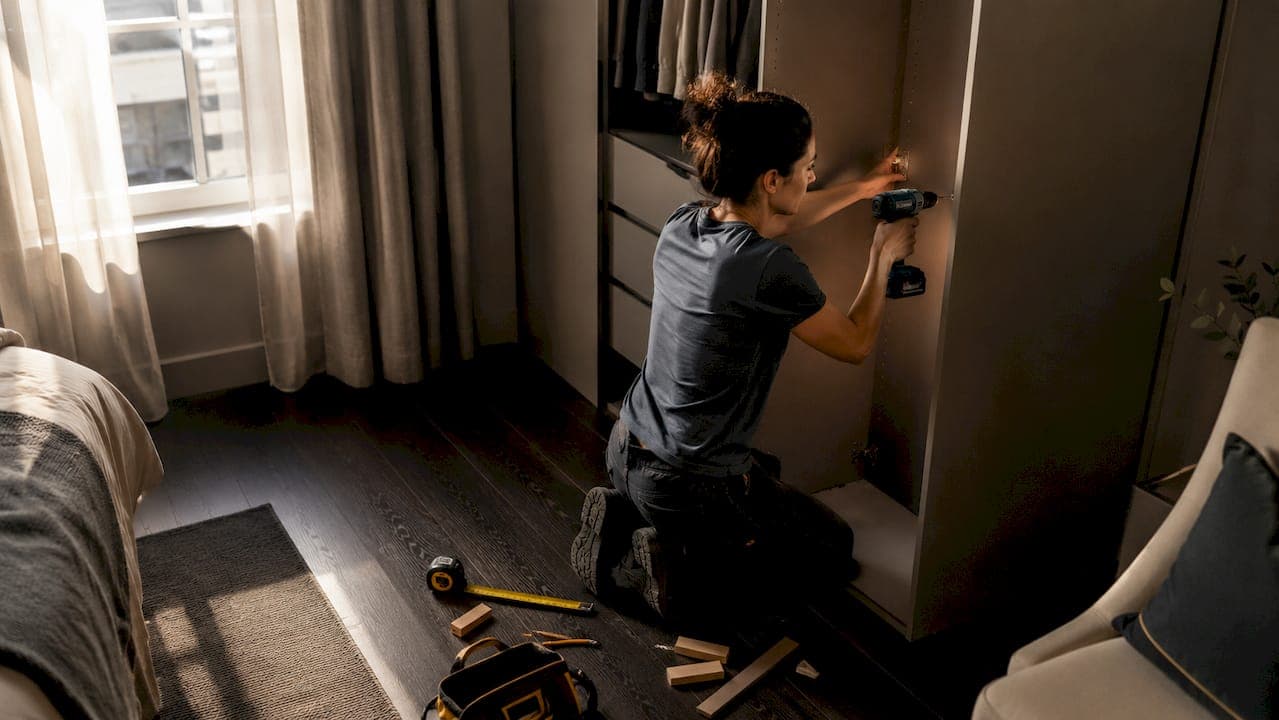
A fitted unit is a piece of furniture permanently installed and built to the exact dimensions of a specific space in your home. Unlike freestanding furniture, which sits independently and leaves gaps at walls, ceilings, and corners, a fitted unit integrates directly with the room's architecture. The result is a clean, purposeful look with no wasted space. Whether you are considering a fitted wardrobe, a media unit for your living room, or a home office setup, understanding what fitted furniture is and how it works will help you make the right decision for your home.
What is a fitted unit and how does it differ from freestanding furniture?
A fitted unit, also known as a built-in, is permanently installed furniture designed to fill a space precisely from wall to wall and floor to ceiling. It is tailored to the exact dimensions of the room rather than adapted from a standard catalogue size. That distinction matters more than most homeowners initially realise.
Freestanding furniture is manufactured to generic dimensions. It works in most rooms but rarely fits any room perfectly. A freestanding wardrobe, for example, will almost always leave a gap above it, beside it, or both. A fitted unit eliminates those gaps entirely.
The key characteristics of fitted units include:
- Permanent installation: Fitted units are fixed to walls, floors, or ceilings and are classified as fixtures rather than personal property.
- Custom dimensions: Each unit is built or configured to the precise measurements of the space, including sloped ceilings, alcoves, and chimney breasts.
- Architectural integration: The unit becomes part of the room's structure, not an addition to it.
- Material and finish choices: Fitted furniture can be specified with veneered finishes, painted MDF, solid timber, or lacquered doors to match any interior style.
Common examples include fitted wardrobes, kitchen units, floor-to-ceiling bookcases, media units, home office desks with integrated storage, and playroom units with built-in shelving and toy storage.
Pro Tip: If your room has an alcove, a chimney breast recess, or a sloped ceiling, a fitted unit is almost always the better solution. Freestanding furniture simply cannot use those spaces effectively.
What benefits do fitted units offer for home design?
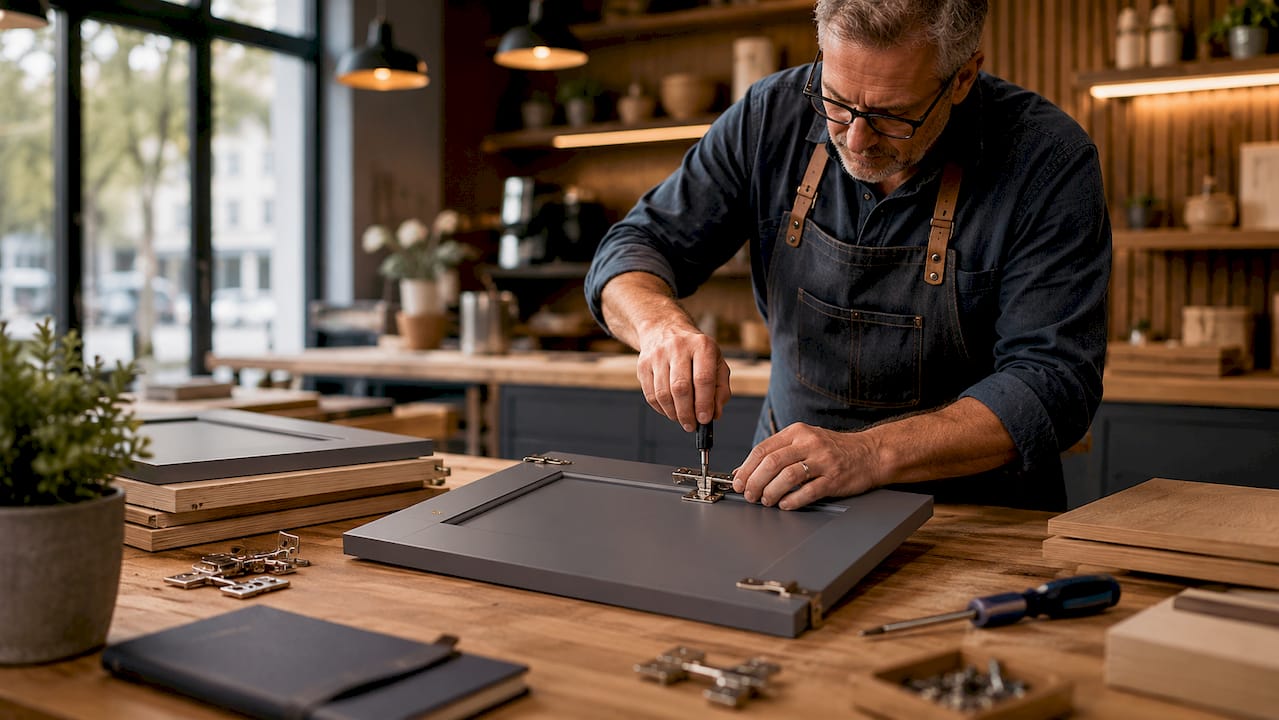
Fitted units deliver measurable advantages over freestanding alternatives, and those advantages compound over time. The most immediate benefit is storage capacity. Built-in furniture provides approximately 35–40% more storage space compared to freestanding furniture occupying the same footprint. That gain comes from using the full height and width of the wall rather than stopping at a standard cabinet height.
The benefits extend well beyond storage volume. Here is how fitted units improve a home across several dimensions:
-
Maximised use of awkward spaces. Alcoves, under-stair recesses, and rooms with irregular angles are difficult to furnish with off-the-shelf pieces. A fitted unit is built around those quirks rather than despite them. Bespoke fitted storage turns problem areas into the most functional spots in the room.
-
Visual cohesion. A fitted unit runs flush with the walls and ceiling, giving a room a finished, intentional appearance. There are no visible gaps, no mismatched heights, and no cluttered surfaces around the unit.
-
Increased property value. High-quality built-ins are classified as fixtures by property appraisers and are included in home valuations. A well-designed fitted wardrobe or fitted home office unit adds to the appraised value of a property in a way that a freestanding piece never will.
-
Durability. Fitted furniture is typically made to measure using higher quality materials than mass-produced freestanding pieces. Quality built-ins can last for decades without the warping, sagging, or structural weakness common in flat-pack alternatives.
-
Reduced clutter and improved room flow. Custom built-ins like window seats and integrated cabinets make rooms feel larger and neater by removing the visual noise of freestanding furniture arrangements.
The cumulative effect is a room that feels intentional and balanced rather than assembled from whatever was available.
How do you choose the right fitted unit for each room?
The right fitted unit depends on the room's function, its dimensions, and how you use the space day to day. Fitted wardrobes, media units, home office units, and playroom units each require a different design approach, and treating them as interchangeable leads to poor results.
Start by assessing the room honestly:
- Room size and shape. Measure the full height, width, and depth of the wall or recess you are working with. Note any irregularities such as sloped ceilings, pipe runs, or protruding skirting boards.
- Primary function. A fitted media unit needs cable management, ventilation for electronics, and display shelving. A fitted home office unit needs desk depth, monitor height, and drawer organisation. A fitted playroom unit needs accessible low shelving, durable surfaces, and storage for bulky toys.
- Internal fittings. Think beyond the exterior. Soft-close drawers, pull-out rails, internal lighting, and adjustable shelves all affect how useful the unit is in daily life.
- Material and finish. Painted MDF suits contemporary interiors. Veneered timber works well in traditional or period homes. The finish should complement the room's existing palette rather than compete with it.
- Permanence versus flexibility. If you plan to stay in the property long term, a fully fitted unit is the right investment. If your needs are likely to change within a few years, a modular fitted system offers some adjustability while still providing a built-in appearance.
Pro Tip: When planning a fitted home office unit, allow for at least 600mm of desk depth. Anything shallower becomes frustrating within weeks, particularly if you use a large monitor or need space to write.
For fitted bedroom storage, the internal layout matters as much as the external design. Hanging space, drawer configuration, and shelf heights should reflect your actual wardrobe rather than a generic template.
Fitted units versus freestanding furniture: which suits your home?
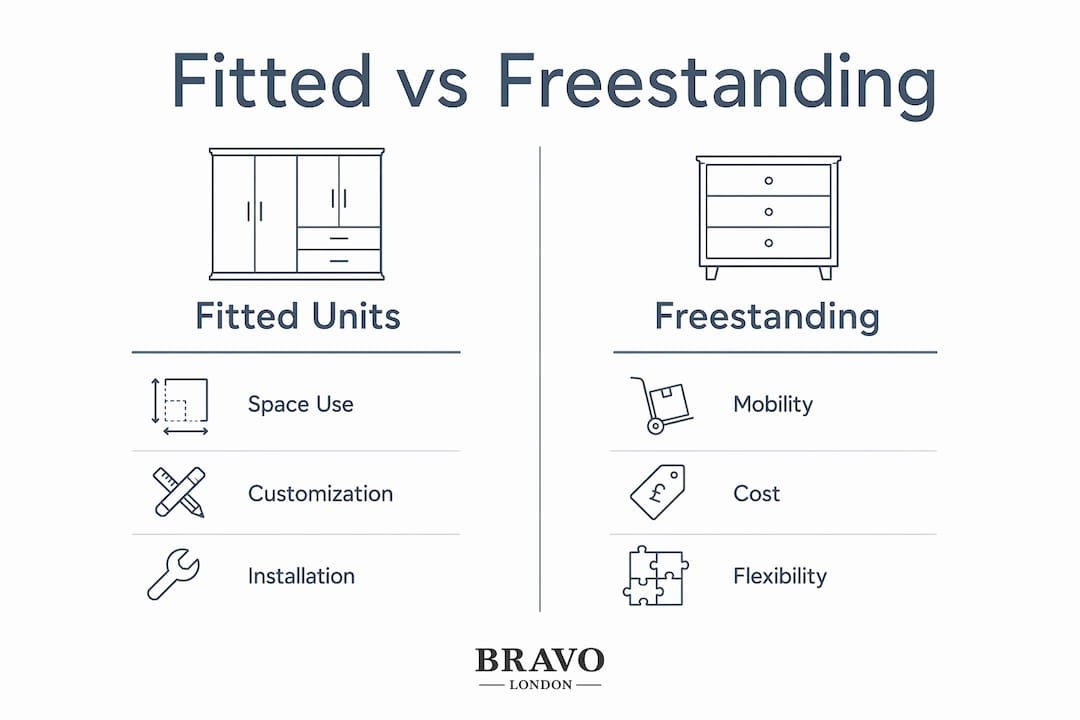
The choice between fitted and freestanding furniture is not simply about aesthetics. It depends on your circumstances, your plans for the property, and the specific challenges of the room. Fitted units suit homeowners planning long-term use of a space, while freestanding furniture suits renters or those who frequently reconfigure their rooms.
| Factor | Fitted units | Freestanding furniture |
|---|---|---|
| Space efficiency | Uses full wall height and width | Limited by standard dimensions |
| Visual integration | Flush with walls, no gaps | Gaps at top, sides, and back |
| Property value | Adds to appraised value as a fixture | No impact on property valuation |
| Flexibility | Permanent, not easily moved | Can be relocated or sold |
| Suitability for renters | Not recommended without landlord consent | Ideal for rented properties |
| Cost | Higher upfront investment | Lower initial cost |
| Longevity | Decades with quality materials | Varies widely by product |
The cost difference is real, but so is the return. A fitted unit built with quality materials and professional installation will outlast several generations of freestanding replacements. For homeowners with irregular rooms, bespoke joinery eliminates the visual and functional compromises that come with adapting standard-sized furniture to non-standard spaces.
The honest answer is that neither option is universally superior. The right choice depends on the room's intended use, how long you plan to stay, and whether the architectural challenges of the space demand a custom solution.
Key takeaways
Fitted units deliver the most value when they are designed around the specific dimensions and function of a room rather than adapted from a standard range.
| Point | Details |
|---|---|
| Fitted unit definition | A permanently installed, custom-dimensioned furniture piece that integrates with a room's architecture. |
| Storage advantage | Built-ins provide approximately 35–40% more storage than freestanding furniture in the same footprint. |
| Property value impact | Quality fitted units are classified as fixtures and contribute to a property's appraised value. |
| Best suited for homeowners | Fitted units are a long-term investment; freestanding furniture is better for renters or flexible arrangements. |
| Bespoke versus modular | Bespoke fitted units handle irregular spaces and architectural quirks that standard modular ranges cannot address. |
What most homeowners get wrong about fitted furniture
The biggest misconception I encounter is that fitted units are simply expensive wardrobes. They are not. A fitted unit is a design decision about how a room functions, not just a storage solution. When a client comes to us with a room that feels cluttered or underused, the problem is almost never a lack of furniture. It is a lack of furniture that actually fits the space.
The second thing most homeowners overlook is the internal specification. Clients spend considerable time choosing door styles and finishes, then accept a generic internal layout without question. The interior of a fitted unit determines how useful it is every single day. Soft-close drawers, pull-out trouser rails, internal LED lighting, and adjustable shelf heights are not luxury additions. They are the difference between a unit you use properly and one you work around.
Working with a bespoke manufacturer rather than a modular retailer changes the conversation entirely. You stop asking "which size fits best?" and start asking "what do I actually need this space to do?" That shift produces better results every time. After more than 1,000 completed projects, the homes that feel most resolved are the ones where the fitted furniture was designed around the life being lived in the room, not the other way around.
— Bravo
Bespoke fitted furniture from Bravo London
Bravo London designs and installs bespoke fitted wardrobes and fitted furniture across London and the surrounding areas, with over 1,000 completed projects and a 10-year warranty on every installation.
Every project begins with a detailed design consultation to understand the room's dimensions, your storage needs, and the aesthetic you want to achieve. Whether you need a fitted media unit for your living room, a fitted home office unit, or fitted living room furniture that makes the most of an awkward alcove, Bravo London builds each piece to your exact specification. The result is furniture that looks as though it was always part of the room, because it was designed to be.
FAQ
What is the fitted unit definition in home design?
A fitted unit is furniture permanently installed and built to the precise dimensions of a specific space, integrating with the room's walls, floor, and ceiling. It is also referred to as a built-in and is classified as a fixture rather than personal property.
What is a fitted media unit?
A fitted media unit is a built-in cabinet or shelving system designed specifically to house a television, audio equipment, and associated cabling, built to the exact dimensions of the wall or alcove it occupies.
What is a fitted home office unit?
A fitted home office unit is a custom-built desk and storage combination installed permanently in a room or recess, designed to maximise workspace and organisation within the available dimensions.
What is a fitted playroom unit?
A fitted playroom unit is a built-in storage and shelving system designed for a child's playroom, typically featuring low accessible shelves, durable surfaces, and integrated storage for toys, books, and craft materials.
Are fitted units worth the investment compared to freestanding furniture?
Fitted units cost more upfront but deliver greater storage capacity, last significantly longer, and add to a property's appraised value as permanent fixtures. For homeowners planning long-term use of a space, the return on investment is clear.