TL;DR:
- First-time homeowners can benefit from choosing the right wardrobe type, such as fitted or built-in, to maximize space and value. Building a capsule wardrobe with 30 to 40 versatile pieces and implementing efficient organization methods keeps the wardrobe functional and clutter-free. Regularly reviewing clothing and setting limits on hanger use helps maintain an organized, practical wardrobe that adapts to changing needs.
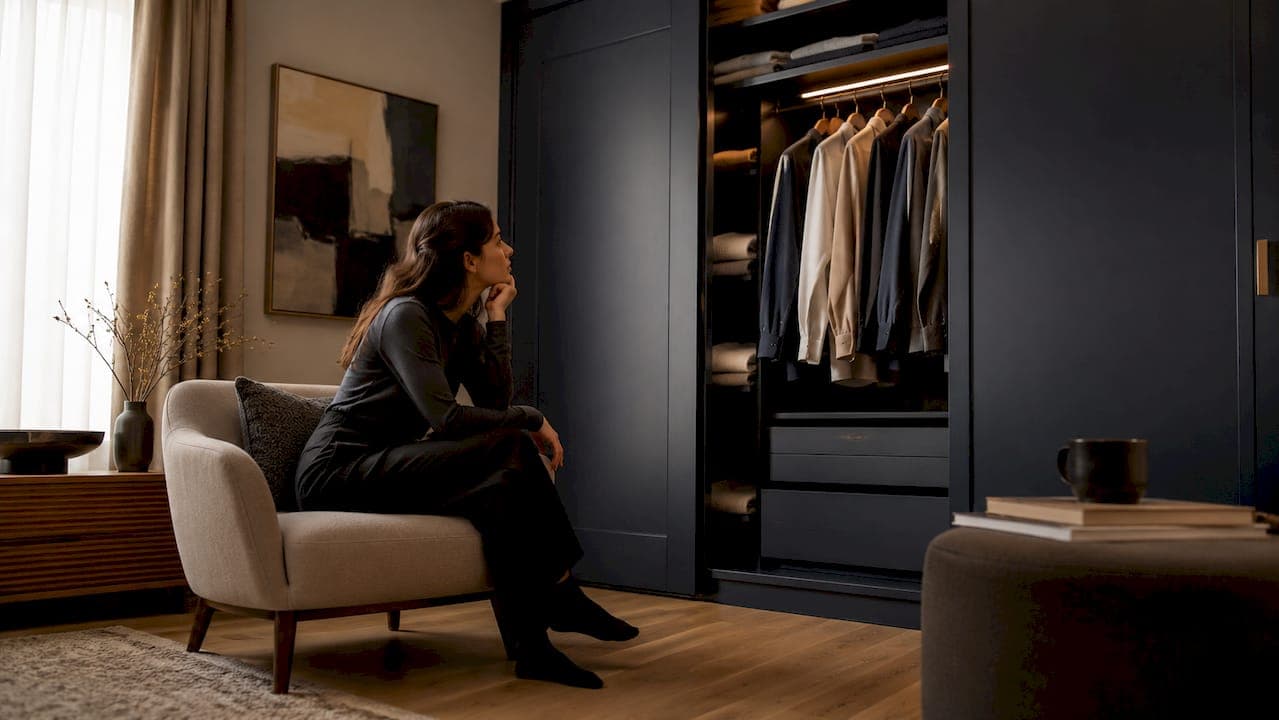
First home wardrobe options are defined as the full range of storage, organisation, and outfit planning solutions available to new homeowners setting up their first independent living space. The industry term covering the clothing side of this is "wardrobe curation," and it sits alongside the physical storage decision you make for your room. Getting both right from the start saves you money, space, and the frustration of a cluttered bedroom. Bravo London has completed over 1,000 bespoke wardrobe projects, and the pattern is consistent: first-time homeowners who plan their storage and clothing system together end up with a space that feels intentional and balanced from day one.
What wardrobe types are best suited for your first home?
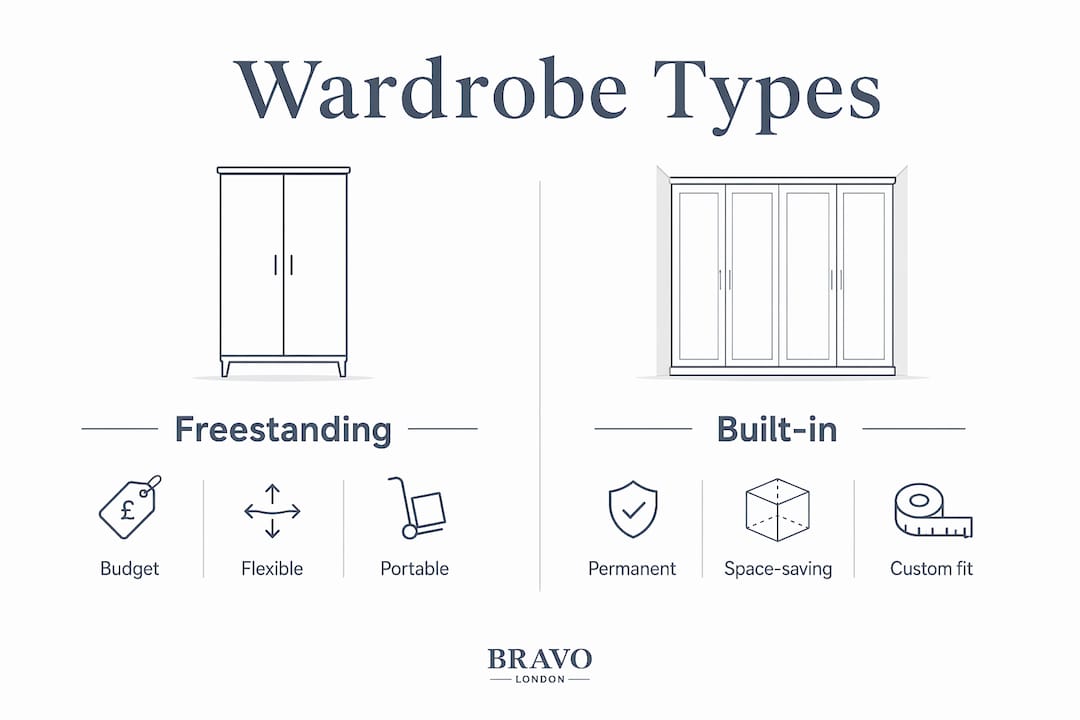
The four main wardrobe types available to first-time homeowners are freestanding, built-in, fitted, and walk-in. Each suits a different combination of budget, room size, and how long you plan to stay in the property.
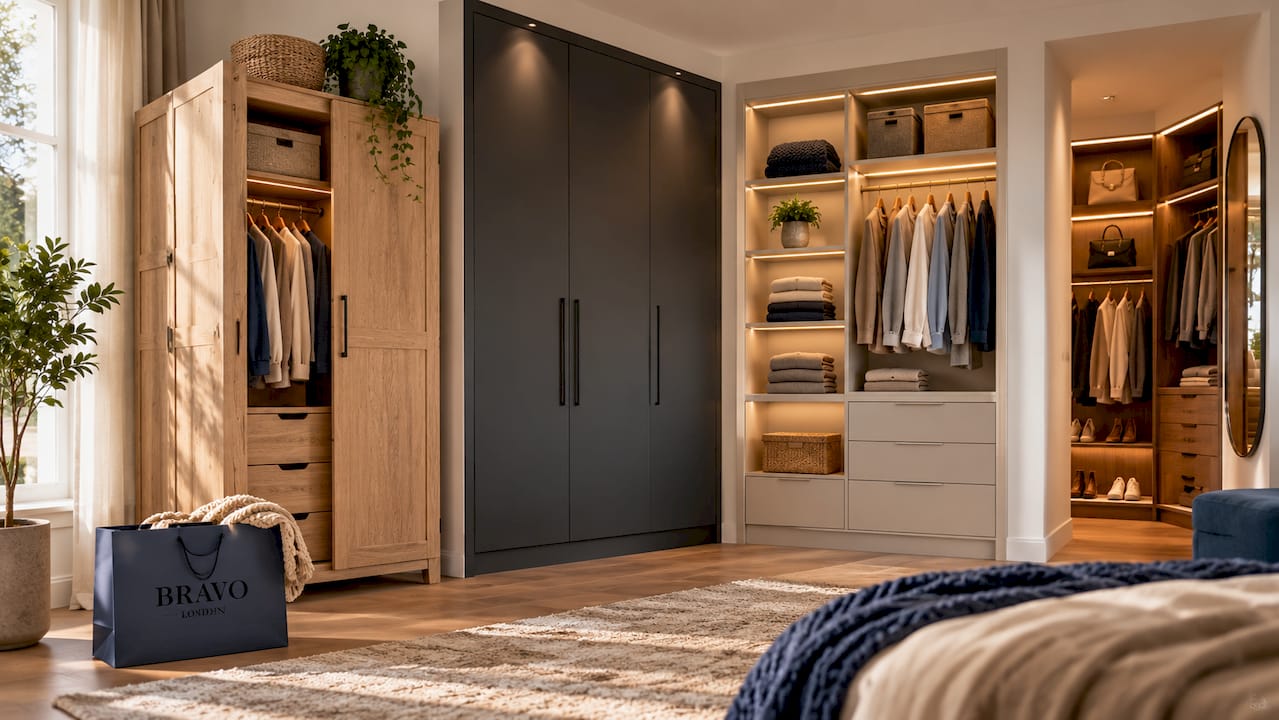
Freestanding wardrobes are the most affordable entry point. You buy them, assemble them, and take them with you when you move. The trade-off is that they rarely use the full height of a room, leaving dead space above, and they can look bulky in smaller bedrooms. They suit renters who have just bought their first home and are not yet ready to commit to permanent fixtures.
Built-in wardrobes sit flush against the wall and use the full floor-to-ceiling height of the room. They feel permanent and tidy, and they add measurable value to a property. The built-in or freestanding decision comes down to how long you plan to stay and whether you want storage that works with the room's architecture rather than against it.
Fitted wardrobes are the most space-efficient option for awkward rooms. They are designed around the exact dimensions of your space, including sloped ceilings, chimney breasts, and alcoves. Bravo London specialises in this type, tailoring each unit to the room rather than forcing a standard box into an irregular space.
Walk-in wardrobes require a dedicated room or a large alcove. They are the most aspirational option for first-time homeowners, but they are achievable in larger properties or where a small bedroom can be repurposed.
| Wardrobe type | Best for | Key advantage | Consideration |
|---|---|---|---|
| Freestanding | Flexible budgets | Portable, no installation | Wastes vertical space |
| Built-in | Long-term owners | Clean lines, adds property value | Requires professional fitting |
| Fitted | Awkward or small rooms | Uses every centimetre | Higher upfront cost |
| Walk-in | Larger homes | Maximum storage and display | Needs dedicated floor space |
Modern features worth considering include sliding door wardrobes, which are ideal for bedrooms where a swinging door would eat into usable floor space. Soft-close drawers, internal LED lighting, and veneered finishes all add daily comfort without requiring a full luxury budget. Corner wardrobes are another practical solution for rooms with awkward angles, turning a dead corner into a functional storage zone.
Pro Tip: Measure your ceiling height before choosing any wardrobe. A unit that reaches the ceiling eliminates the dust-collecting shelf above and gives you an extra 30–40cm of usable storage.
How does a capsule wardrobe system simplify outfit planning?
A capsule wardrobe is a curated collection of versatile clothing pieces that work together across multiple outfits. Standard capsule size ranges from 30 to 40 pieces for most beginners, with minimalist approaches using as few as 10 items. That range matters because it gives you a concrete target rather than an open-ended accumulation.
The system works because every item earns its place. A neutral colour palette, typically built around black, white, navy, grey, and one or two accent colours, means that most pieces mix and match without effort. You stop standing in front of a full wardrobe feeling like you have nothing to wear, because every item you own goes with at least three others.
The outfit formula approach takes this further. You build reliable combinations in advance: a base layer, a mid layer, and a finishing piece such as a jacket or scarf. This works particularly well for first-time homeowners who are managing a new commute, a new social life, and a new home simultaneously. Fewer decisions in the morning means less mental load overall.
- Audit what you already own before buying anything new.
- Identify your colour palette and stick to it for new purchases.
- Choose 5–8 base pieces that work across casual and smart occasions.
- Add 3–5 statement or seasonal pieces that complement the base.
- Review the collection every six months and remove anything unworn.
Capsule wardrobes are systems, not rigid rules. As your life changes, whether through a new job, a change in body shape, or a shift in lifestyle, the method stays the same while the specific items rotate. That flexibility is what makes it a genuinely useful framework for first-time homeowners rather than a temporary trend.
Pro Tip: Photograph your favourite outfits and save them to a folder on your phone. When you are tired or rushed, you have a ready-made reference that takes the guesswork out of getting dressed.
What home closet organisation techniques maximise space?
Good organisation turns any wardrobe, regardless of size or type, into a space that works for you every day. The 3-Layer Closet Rule is the industry-standard framework: the eye-level zone, defined as 40–60 inches from the floor, holds daily wear; the zone above holds off-season or rarely used items; the floor and lower shelves hold shoes, bags, and bulky storage. This zoning removes the habit of piling everything at eye level and then losing track of what you own.
Hanger choice has a bigger impact than most first-time homeowners expect. Slim velvet or felt hangers maximise rod space and stop clothes slipping onto the floor. Bulky plastic hangers can reduce your rod capacity by a third. Kid-size hangers work particularly well for trousers, keeping them neat without the bulk of a multi-pant hanger.
- Use slim, uniform hangers throughout. Mix of sizes and styles creates visual noise and wastes space.
- Zone your wardrobe by category: all tops together, all trousers together, all outerwear together.
- Use the back of the wardrobe door for accessories, belts, or a full-length mirror.
- Store folded knitwear on shelves rather than hanging it, which prevents shoulder distortion.
- Rotate seasonal items every spring and autumn so your daily zone only holds what is relevant.
For accessories and smaller items, lined fabric baskets or acrylic containers are the correct choice. Wicker baskets snag delicate fabrics like silk scarves and fine knitwear. Clear acrylic containers also let you see the contents at a glance, which removes the habit of tipping everything out to find one item.
Vertical space is consistently underused in first homes. Adding a second hanging rail below shorter items like jackets and shirts doubles the hanging capacity of that section. Back-of-door organisers and clothes storage solutions for compact rooms can add meaningful capacity without requiring any structural changes.
Pro Tip: Set a fixed hanger limit of 50 hangers in your wardrobe. When you add a new item, one old item must leave. This physical constraint keeps your wardrobe at a manageable size without requiring constant conscious effort.
How to evaluate clothing purchases for your first wardrobe
The Cost Per Wear formula is the most practical tool for making clothing decisions. CPW divides the item cost by the number of times you expect to wear it. A £200 pair of leather loafers worn 100 times costs £2 per wear. A £40 top worn twice costs £20 per wear. The formula makes the case for quality over quantity in a way that is immediately concrete.
For first-time homeowners building a wardrobe from scratch, the priority order is clear. Invest in pieces you wear most frequently and in all seasons first. These are typically trousers, a structured jacket, quality footwear, and a few versatile tops. Trend pieces and seasonal items come later, once the foundation is solid.
- Fit first. A well-fitting mid-range item always looks better than an expensive piece that does not sit correctly on your body. Budget for minor tailoring on key pieces.
- Buy gradually. Resist the urge to fill your wardrobe immediately. Buying in stages means you understand what you actually need rather than what you think you need.
- Track cost per wear. Keep a rough mental note of how often you reach for each item. Anything unworn after three months is a candidate for removal.
- Balance classics and trends. A ratio of roughly 80% classic staples to 20% trend pieces keeps your wardrobe relevant without constant replacement.
For small apartment spaces, this discipline is even more important. Limited storage means every item must justify its presence. A wardrobe built on this principle stays manageable and genuinely useful rather than becoming a source of daily frustration.
Professional organisers recommend a five-step sorting process when reviewing your wardrobe: pull everything out, sort into keep, donate, and discard piles, categorise by type and colour, plan storage placement, and commit to regular maintenance. Doing this twice a year prevents gradual accumulation from undoing the system you built.
Key takeaways
A fitted wardrobe system combined with a capsule clothing collection and consistent organisation habits gives first-time homeowners the most functional and lasting result.
| Point | Details |
|---|---|
| Choose the right wardrobe type | Match freestanding, built-in, fitted, or walk-in to your room size, budget, and tenure. |
| Build a capsule collection | Aim for 30–40 versatile pieces in a neutral palette that mix and match reliably. |
| Apply the 3-Layer Closet Rule | Keep daily wear at eye level (40–60 inches) and store off-season items above or below. |
| Use CPW to guide purchases | Divide item cost by expected wears to prioritise quality pieces over cheap, rarely worn ones. |
| Set a hanger limit | Cap hangers at 50 to create a physical constraint that keeps wardrobe size manageable. |
What I have learned from setting up first wardrobes
The most common mistake I see from first-time homeowners is buying too much storage before understanding how they actually live. They fill a large wardrobe with items they brought from their previous home, never reassess, and then wonder why the space feels chaotic six months later. The wardrobe becomes a holding area rather than a working system.
The second mistake is treating the wardrobe as a fixed decision. Your clothing needs at 28 are not the same as they will be at 35. A new job, a change in social habits, or a growing family all shift what you need to store and access daily. The homeowners I see with the most functional wardrobes are the ones who review and adjust twice a year without sentiment.
My honest advice is to start smaller than you think you need. A well-organised fitted wardrobe with 40 carefully chosen items outperforms a sprawling freestanding unit stuffed with 120 pieces you cannot find. The physical space matters, but the system inside it matters more. Get the system right first, then invest in the storage that supports it.
— Bravo
Bespoke wardrobe solutions for your new home
Choosing the right wardrobe for your first home is a decision that shapes how you use your bedroom every single day. Bravo London designs and manufactures fitted wardrobes built specifically around your room's dimensions, whether that means working around a chimney breast, a sloped ceiling, or an awkward alcove.
Every project is made in London, backed by a 10-year warranty, and designed to maximise every centimetre of your available space. With over 1,000 completed projects, Bravo London brings the kind of experience that turns a difficult room into a space that feels considered and calm. If you are ready to move beyond off-the-shelf options, bespoke fitted furniture gives your first home a storage solution built to last.
FAQ
What are the main wardrobe types for a first home?
The four main types are freestanding, built-in, fitted, and walk-in. Fitted wardrobes offer the best use of space in smaller or irregular rooms common in first homes.
How many items should a beginner capsule wardrobe contain?
A standard beginner capsule wardrobe contains 30–40 pieces, including tops, bottoms, outerwear, and shoes. Minimalist versions can work with as few as 10 core items.
What is the 3-Layer Closet Rule?
The 3-Layer Closet Rule places daily wear at eye level (40–60 inches from the floor), off-season items in the upper zone, and shoes or bulky storage at floor level.
Is a fitted wardrobe worth the cost in a first home?
A fitted wardrobe adds measurable property value and uses space that freestanding units leave wasted. For homeowners planning to stay long-term, the return on investment is clear.
How do I stop my wardrobe filling up again after organising it?
Set a fixed hanger limit, typically 50 hangers, so that adding a new item requires removing an old one. This physical constraint maintains wardrobe size without ongoing effort.