TL;DR:
- Fully fitted furniture is built precisely to a room’s dimensions, eliminating wasted space and maximizing storage. It improves room flow by using custom design to adapt to architectural features and enhance movement. This tailored approach increases property value and creates a seamless, cohesive interior.
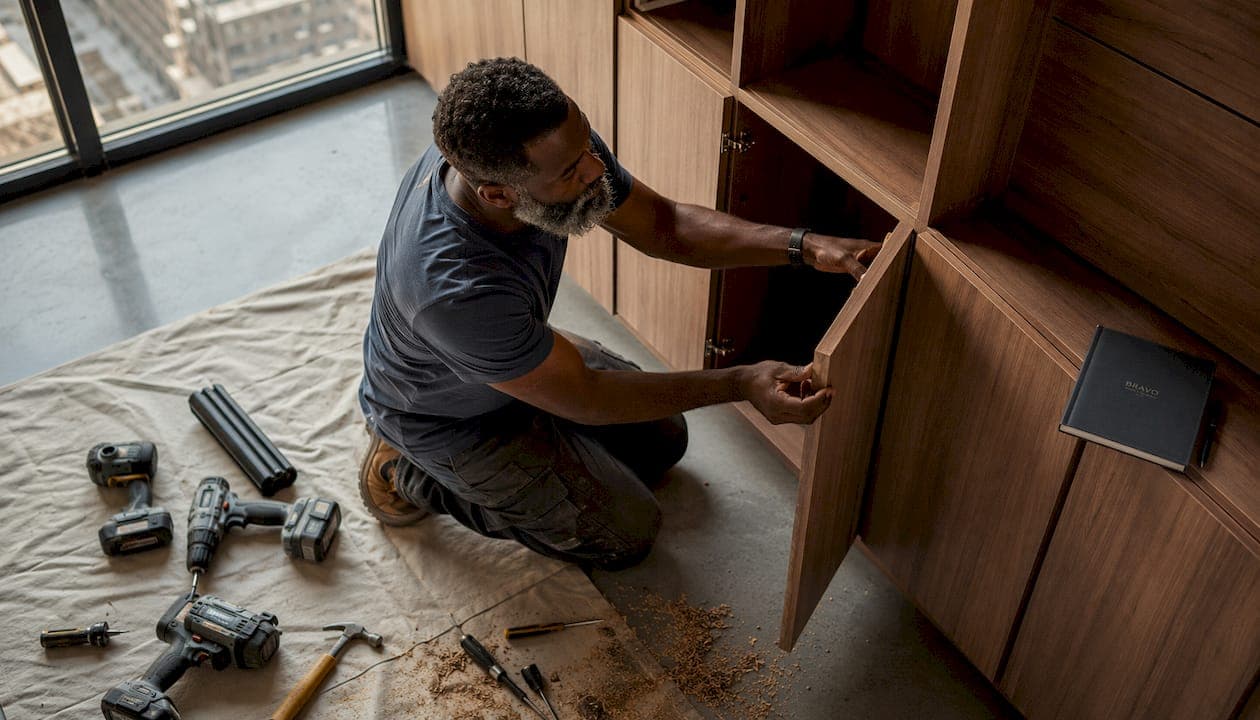
Fully fitted furniture is defined as cabinetry and storage built precisely to your room's exact dimensions, leaving no wasted gaps, awkward voids, or mismatched proportions. The fully fitted furniture space planning benefits go far beyond aesthetics. A bespoke approach treats your walls, ceiling height, and architectural quirks as assets rather than obstacles. Bravo London has delivered over 1,000 completed projects using this methodology, and the results consistently show the same outcome: rooms that feel larger, calmer, and more purposeful. Whether you live in a Victorian terrace with sloped ceilings or a modern flat with limited square footage, fitted furniture turns spatial constraints into genuine advantages.
1. How fully fitted furniture maximises every inch of space
The single greatest advantage of fitted furniture is zero wasted space. A standard wardrobe from a high street retailer leaves gaps at the top, sides, and floor. Those gaps accumulate into a surprising amount of lost storage across a whole room.
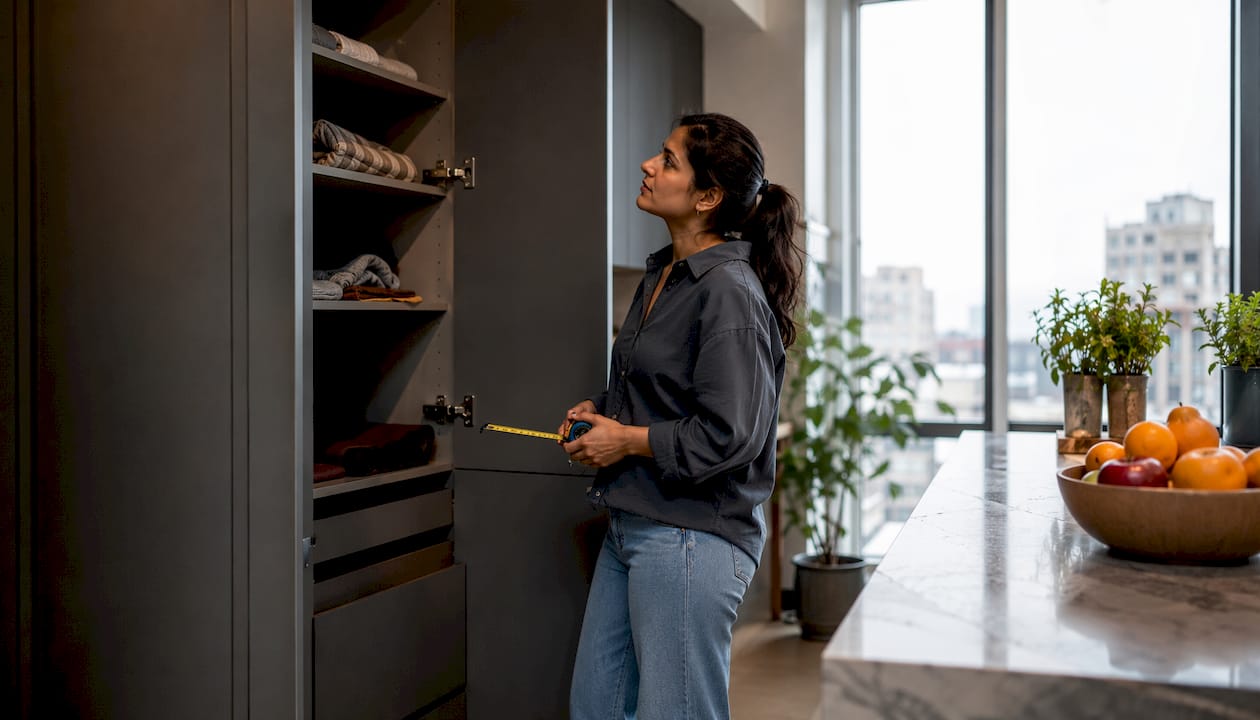
Custom furniture adapts to unique architectural features that standard dimensions simply cannot address. Alcoves, chimney breasts, sloped ceilings, and recessed walls all become usable storage rather than dead zones. A bespoke alcove unit, for example, can hold the same volume as a freestanding bookcase while occupying a fraction of the visual footprint.
The difference in practice is measurable. Ready-made pieces are built to standard widths of 60cm, 80cm, or 100cm. A room that is 347cm wide will always have an awkward remainder. A fitted unit fills that exact 347cm without compromise.
- Floor-to-ceiling cabinetry captures vertical space that standard furniture ignores
- Under-stair voids become fitted storage solutions rather than cluttered cupboards
- Sloped attic ceilings accept custom-angled units that follow the roofline precisely
- Shallow fitted shelving in hallways adds storage without reducing walkway width
Pro Tip: Before commissioning any fitted piece, measure your room at multiple heights. Walls in older properties often lean or bow, and a millimetre-perfect fit requires measurements taken at floor, mid-height, and ceiling level.
2. Improving room flow and movement through space planning
Fitted furniture improves movement flow by designing around user habits and room shape, not around a manufacturer's standard product range. This is the core principle of professional space planning services, and it changes how a room feels to live in every single day.
Sliding doors and shallow shelves improve circulation in tight spaces where hinged doors would block walkways. A bedroom with a 90cm clearance between the bed and the wall cannot accommodate a standard wardrobe with outward-opening doors. A fitted sliding-door unit solves that problem without any compromise on storage capacity.
Thoughtful cabinetry design also accounts for door clearances, light switches, and radiator positions. These details are invisible when done well. When ignored, they create daily friction that accumulates into genuine frustration.
- Sliding and pocket doors eliminate the swing radius that standard hinged doors require
- Fitted units placed along one wall consolidate storage and free the centre of the room
- Reduced visual clutter from joined units creates a calmer perception of space
- Shallow fitted shelving at 20–25cm depth stores books and objects without projecting into the room
The result is a room that feels intentional and balanced. Furniture that was designed for the space reads as part of the architecture rather than an addition to it.
3. Customisation and functional advantages of bespoke fitted furniture
Bespoke fitted furniture allows exact functional and ergonomic requirements to be met in ways that off-the-shelf products cannot match. This is not simply about aesthetics. It is about building storage that works precisely for how you live.
Adapted compartments for belongings and unique household workflows are a defining feature of the bespoke process. A fitted wardrobe for someone who owns forty pairs of shoes requires a completely different internal layout than one designed for a person who prioritises hanging space for suits. Both can be achieved within the same external footprint.
The choice of materials, finishes, and hardware adds another layer of personalisation. Veneered oak, painted MDF, soft-close drawers, pull-out trouser racks, and integrated lighting are all specifiable. You are not choosing from a catalogue of pre-set configurations. You are designing a piece that reflects your household's actual needs.
- Drawer heights and depths tailored to specific items, from cutlery to camera equipment
- Accessible lower shelving and pull-out rails for users with mobility considerations
- Integrated charging points and cable management built into home office cabinetry
- Finishes matched precisely to existing décor, from matte lacquer to natural timber veneer
Pro Tip: When planning internal layouts, list every category of item you need to store before the design consultation. Designers work most effectively when they understand your actual belongings, not a generic estimate.
Long-term durability is another practical advantage. Custom furniture costs more upfront than comparable ready-made pieces, but it is built to last. Bravo London backs its work with a 10-year warranty, which reflects the quality of materials and construction rather than a marketing gesture.
4. Visual and architectural integration benefits
Fitted furniture creates a seamless flow between walls and cabinetry that freestanding pieces cannot replicate. The visual effect is significant. A room furnished with bespoke units reads as a considered interior rather than a collection of separate objects.
Custom wall units with seamless flow can conceal televisions, hide utility meters, and integrate appliances behind matching door fronts. This concealed functionality is one of the most requested features in contemporary home design. A living room where the television disappears behind cabinet doors when not in use feels fundamentally different from one where the screen dominates the wall.
Architectural features benefit directly from this approach. A fireplace flanked by fitted alcove units becomes a focal point rather than an awkward interruption. A window seat with fitted storage beneath it transforms a bay window from a draughty corner into the most desirable spot in the room.
- Fitted cabinetry painted to match walls creates a built-in, architectural appearance
- Integrated lighting within units highlights objects and adds warmth to the room
- Concealed storage behind flush doors removes visual noise from living spaces
- Bespoke units designed around fireplaces, windows, and structural columns enhance rather than fight the architecture
The fitted furniture and joinery approach treats every room as a whole composition. Each unit is designed in relation to the others, so the finished result has a coherence that room-by-room purchasing never achieves.
5. How fitted furniture supports multi-use living spaces
Modern homes increasingly require rooms to serve more than one purpose. A spare bedroom doubles as a home office. A kitchen diner needs to function as a workspace and an entertaining space. Multi-use furniture thinking is now central to how fitted cabinetry is designed.
Fitted furniture handles this challenge better than freestanding alternatives because it can be designed with multiple functions built in from the start. A fitted home office unit can include a fold-away desk, deep filing drawers, open shelving for reference books, and a concealed printer compartment, all within a single wall of cabinetry that closes to look like a wardrobe when the working day ends.
This adaptability matters particularly for renters and homeowners in urban properties where square footage is limited. A room that serves two purposes well is more valuable than two rooms that serve one purpose poorly.
6. Property value and long-term lifestyle investment
Fitted furniture shifts a home's narrative from merely furnished to thoughtfully integrated. That distinction matters to buyers, valuers, and to the people who live there every day.
"Viewing fitted cabinetry as a 'hero' element transforms a home from merely furnished to thoughtfully integrated, supporting lifestyle continuity. Experts at Kavela stress the importance of 'hero' pieces with a perfect fit that shape the home's story rather than simply filling its rooms."
Bespoke suits long-term investment in core home furnishings such as kitchens, wardrobes, and main living spaces. Ready-made furniture is appropriate for temporary or budget-constrained situations. For the pieces that define how a home functions and feels, bespoke is the more durable and considered choice.
The long-term investment case for fitted furniture rests on three factors: durability of materials, precision of fit, and the way quality cabinetry reads to future buyers. A fitted wardrobe built from solid timber with dovetail joinery will outlast three or four generations of flat-pack alternatives. That longevity changes the cost calculation entirely.
Fitted wardrobes and kitchen cabinetry are consistently cited by estate agents as features that support asking prices in competitive markets. The quality is visible and tangible in a way that fresh paint or new flooring is not.
Key takeaways
Fully fitted furniture delivers the most value when it is designed around your room's exact dimensions, your storage needs, and your daily habits rather than adapted from a standard product range.
| Point | Details |
|---|---|
| Zero wasted space | Custom sizing fills every centimetre, including alcoves, sloped ceilings, and awkward voids. |
| Better room flow | Sliding doors and wall-hugging units free floor space and improve daily movement. |
| Precise functionality | Bespoke internal layouts match your actual belongings and household workflows. |
| Architectural coherence | Fitted units integrate with walls and features to create a considered, calm interior. |
| Long-term value | Quality bespoke cabinetry outlasts ready-made alternatives and supports property appeal. |
What I have seen after 1,000+ fitted furniture projects
After working on over a thousand bespoke projects, the pattern is consistent. Homeowners who invest in fitted furniture do not talk about the storage they gained. They talk about how the room feels now.
The most common observation is that the space feels larger, even though nothing structural changed. That is the effect of removing visual clutter, eliminating gaps between units, and designing furniture that belongs to the room rather than sitting in it. A fitted wardrobe that runs floor to ceiling and wall to wall reads as architecture. A freestanding wardrobe reads as an object.
The second observation is how much daily friction disappears. Doors that no longer clash. Drawers that hold exactly what they are meant to hold. A home office that closes away at the end of the day. These are small things individually. Together, they change how a home feels to live in.
My honest view is that most homeowners underestimate the impact of the planning stage. The furniture itself is the visible result, but the space planning process is where the real value is created. Getting the layout right, accounting for movement, light, and usage patterns, is what separates a fitted room that works from one that merely looks good in photographs.
— Bravo
Bespoke fitted furniture from Bravo London
Bravo London specialises in bespoke fitted wardrobes and cabinetry designed around your home's exact dimensions and your household's specific needs. Every project begins with a detailed space planning consultation, so the finished furniture works as hard as it looks.
With over 1,000 completed projects and a 10-year warranty on all work, Bravo London brings the same level of care to a single fitted wardrobe as to a whole-home joinery commission. If you have an awkward alcove, a sloped ceiling, or a room that has never quite worked, explore the full range of bespoke cabinetry solutions and book a consultation to see what a precise, planned approach can do for your space.
FAQ
What are the main benefits of fully fitted furniture?
Fully fitted furniture eliminates wasted space, improves room flow, and integrates with your home's architecture. It is built to your exact dimensions, so every centimetre of wall, floor, and ceiling height is used.
Is fitted furniture worth the extra cost?
Custom furniture costs more upfront than ready-made alternatives, but it lasts significantly longer and is built to fit your specific space. For core home furnishings like wardrobes and kitchen cabinetry, the durability and precision justify the investment.
Can fitted furniture work in small or awkward rooms?
Fitted furniture is particularly effective in small and awkward rooms. Custom pieces adapt to sloped ceilings, alcoves, and irregular wall angles that standard furniture cannot address.
How does fitted furniture improve a room's appearance?
Fitted units create a seamless visual flow between cabinetry and walls, reducing clutter and giving the room a calm, considered appearance. Concealed storage behind flush doors removes visual noise that freestanding furniture typically creates.
Does fitted furniture add value to a property?
Quality fitted cabinetry is consistently associated with stronger property appeal. Bespoke pieces signal craftsmanship and careful planning to prospective buyers, which supports asking prices in competitive markets.