
TL;DR:
- Made-to-order furniture is produced only after a confirmed customer order, allowing for precise customization. It offers a better fit, quality materials, and reduces waste but requires longer lead times and careful planning. The process differs from bespoke and ready-made options, with the longest wait reflecting craftsmanship and attention to detail.
Made-to-order furniture is defined as furniture produced only after a customer places a confirmed order, meaning no item enters production until a specific purchase is made. This approach contrasts sharply with ready-made or make-to-stock models, where products sit in warehouses waiting for buyers. The made-to-order meaning matters because it shifts control to you: you specify dimensions, materials, and finishes before a single piece of timber is cut. For homeowners seeking personalised storage or fitted living spaces, understanding this distinction is the first step toward making a genuinely informed choice.
How does made-to-order furniture production work?
The MTO workflow follows a clear, documented sequence that begins the moment your order is confirmed. Each stage builds on the last, and skipping any step compromises the final result. Here is how the process unfolds from start to delivery:
- Order placement. You confirm your requirements: dimensions, materials, colour, finish, and any functional features such as soft-close drawers or veneered panels.
- Specification finalisation. The maker produces a technical drawing and a bill of materials. Nothing is ordered from suppliers until this document is signed off.
- Material procurement. Timber, fabric, hardware, and fixings are sourced specifically for your piece. Manufacturers confirm quantities and delivery schedules only after order confirmation, which eliminates speculative purchasing.
- Timber acclimation. Raw wood must adjust to the humidity and temperature of its destination environment before cutting begins. This step prevents warping or cracking after installation and is critical for longevity.
- Production. Cutting, shaping, and assembly take place in sequence. Each component is made to the exact specification from step two.
- Quality control. Joints, finishes, and mechanisms are inspected before the piece leaves the workshop.
- Delivery and installation. Lead times are longer than for stock furniture, typically several weeks, because every stage above happens after your order is placed.
The longer wait reflects craftsmanship, not delay. A piece built to your exact measurements cannot be rushed through the same timeline as a flat-pack unit pulled from a shelf.
Pro Tip: Ask your maker for a written production schedule at the point of order. Knowing which week covers timber acclimation, which covers assembly, and which covers finishing helps you plan your home project without surprises.
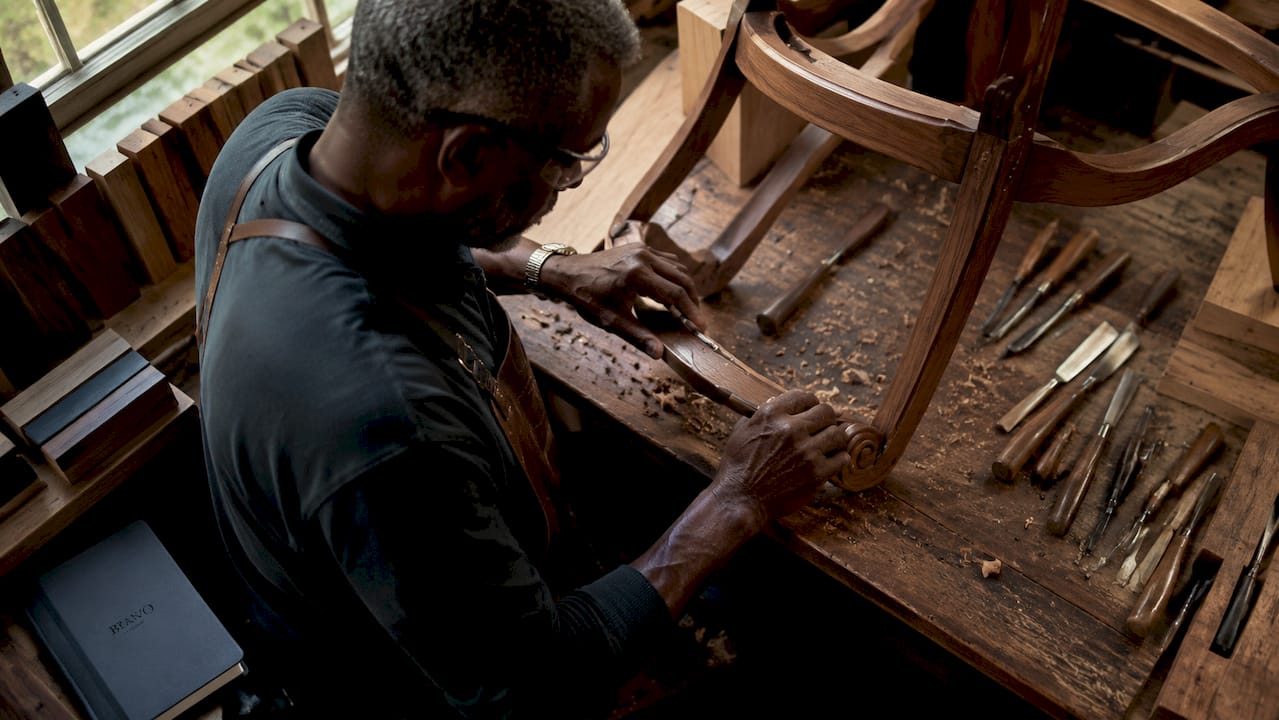
What is the difference between made-to-order, custom, bespoke, and ready-made furniture?
These four terms are used interchangeably in marketing copy, but they describe meaningfully different things. Knowing the distinction helps you set realistic expectations about design freedom, cost, and delivery time.
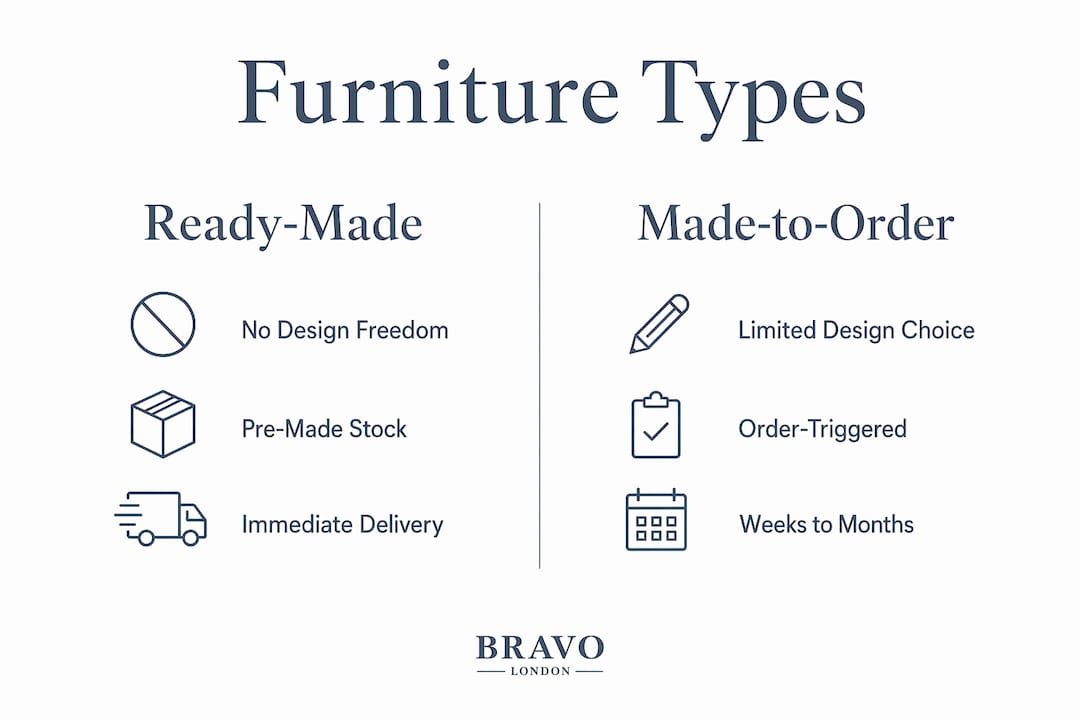
Made-to-order vs bespoke is the distinction most buyers miss. Here is a clear breakdown:
| Type | Design freedom | Production trigger | Typical lead time |
|---|---|---|---|
| Ready-made | None | Pre-manufactured | Immediate or days |
| Made-to-order | Within fixed templates | Confirmed customer order | Weeks |
| Custom furniture | Modification of existing designs | Confirmed customer order | Weeks to months |
| Bespoke furniture | Fully original from blank slate | Confirmed customer order | Months |
Ready-made furniture is pre-manufactured in standard sizes and finishes. It is available immediately but assumes your space fits standard dimensions, which it often does not.
Made-to-order furniture is produced after your order, but within a defined design framework. You choose from available sizes, finishes, and configurations. The maker does not design from scratch; they build a known product to your selected specifications.
Custom furniture goes one step further. It involves modifying an existing design to meet your requirements, perhaps adjusting the depth of a wardrobe or changing the internal layout. The collaborative process requires you to communicate technical and functional requirements clearly.
Bespoke furniture starts from a blank slate. A designer works with you to create an entirely original piece, shaped around your home's architecture, your lifestyle, and your aesthetic preferences. It is the most design-intensive option and carries the highest cost.
Understanding whether a maker is offering truly bespoke work or simply custom modifications helps you avoid paying bespoke prices for made-to-order results.
What are the benefits and challenges of made-to-order furniture?
Made-to-order furniture delivers advantages that ready-made products cannot match, but it also requires planning that many homeowners underestimate.
The practical benefits
- Precise fit. A piece built to your exact measurements fills a space completely, without gaps or overhangs. This matters most in alcoves, under-stair areas, and rooms with sloped ceilings.
- Material quality. Because each order is produced individually, makers can source better materials than those used in mass production runs.
- Reduced waste. MTO production reduces inventory waste by eliminating speculative manufacturing, which accounts for 20–30% of unsold stock in other sectors. Producing only what is ordered is better for the environment and for the maker's margins.
- Personal expression. You choose the finish, the internal configuration, and the hardware. The result reflects your home, not a showroom floor.
- Spatial intelligence. Custom pieces transform architectural dead zones into functional storage or living areas. A standard wardrobe cannot do that.
For ideas on making the most of compact rooms, space-saving furniture ideas for urban apartments show how thoughtful design choices compound across a small floor plan.
The real challenges
- Longer lead times. Production begins after your order, so you will wait. Weeks are normal; months are possible for fully bespoke work.
- Higher upfront cost. Individual production runs cost more per unit than mass manufacturing. The investment is justified by longevity and fit, but the initial outlay is higher.
- Planning discipline. You need to know your measurements, your finish preferences, and your functional requirements before placing an order. Changing your mind mid-production is expensive.
Pro Tip: Before ordering, measure your space at three heights and three widths. Walls are rarely perfectly square, and professional bespoke makers measure on-site to account for architectural irregularities that standard furniture simply ignores.
How can made-to-order furniture improve your home decor and storage?
Made-to-order furniture works best when it addresses a specific spatial problem that off-the-shelf products cannot solve. The most common applications in residential homes include:
- Fitted wardrobes. A wardrobe built floor to ceiling and wall to wall uses every centimetre of available height. Standard wardrobes leave dead space above and beside them.
- Under-stair storage. The triangular void beneath a staircase is one of the most wasted spaces in a home. A made-to-order unit fits the exact slope and depth of your staircase, turning dead space into drawers, shelving, or a compact home office.
- Alcove shelving and cabinetry. Victorian and Edwardian homes in particular have deep alcoves beside chimney breasts. A fitted unit built to the exact recess dimensions looks architectural rather than added-on.
- Kitchen cabinetry. Urban kitchen design in smaller homes benefits significantly from cabinetry built to the room's exact footprint, maximising worktop space and storage without wasting a single centimetre.
- Home office furniture. A desk and shelving unit designed around your specific wall, window position, and equipment needs produces a workspace that feels intentional and balanced.
Bespoke fitted storage takes this further by integrating the furniture with the room's architecture, so the piece looks as though it was always part of the building. Bravo London specialises in exactly this kind of work, with over 1,000 completed projects and a 10-year warranty on craftsmanship. The approach combines on-site measurement with a collaborative design process, producing fitted furniture solutions that address the specific spatial challenges of each home.
The difference between a made-to-order piece and a ready-made alternative is most visible in rooms with irregular dimensions. A standard unit in an alcove that is 847mm wide will always look like a compromise. A made-to-order unit in the same space looks like it belongs.
Key takeaways
Made-to-order furniture is the most practical choice for homeowners with specific spatial requirements, because it delivers a precise fit, better material quality, and reduced waste compared to ready-made alternatives.
| Point | Details |
|---|---|
| Production trigger | Made-to-order furniture enters production only after a confirmed customer order. |
| Terminology matters | Bespoke means original design from scratch; made-to-order works within fixed templates. |
| Lead times reflect quality | Longer waits include timber acclimation and individual craftsmanship, not inefficiency. |
| Spatial benefits | Custom pieces fit awkward spaces precisely, turning dead zones into functional areas. |
| Environmental advantage | MTO eliminates speculative production, reducing inventory waste significantly. |
Why I believe made-to-order is worth the wait
After working with hundreds of homeowners on fitted furniture projects, the question I hear most often is: "Why does it take so long?" The honest answer is that the wait is the product. Timber acclimation, individual cutting, hand-finished joints: none of these can be rushed without compromising the result.
What surprises most homeowners is how much the collaborative process changes their expectations. When you sit down with a designer, measure your space properly, and choose materials with a specific room in mind, you stop thinking about furniture as a purchase and start thinking about it as a decision. That shift in mindset produces better outcomes every time.
The sustainability argument is also stronger than most people realise. A piece built to last 20 years in a space it fits perfectly is far less wasteful than three rounds of ready-made furniture that never quite works. The long-term investment value of bespoke and made-to-order furniture is not just financial. It is the value of living in a home that works.
My advice: plan early, measure carefully, and choose a maker who offers on-site measurement as standard. The difference between a good made-to-order piece and a great one is almost always in the preparation, not the production.
— Bravo
Bravo London's approach to made-to-order and bespoke furniture
Bravo London designs and builds made-to-order and bespoke furniture for homeowners across London, with a particular focus on spaces that standard furniture cannot address. Every project begins with an on-site measurement visit, followed by a design consultation that covers dimensions, materials, finishes, and internal configurations.
The result is furniture that fits your home precisely, carries a 10-year warranty, and reflects your personal style rather than a catalogue page. Whether you need fitted wardrobes that use every centimetre of wall height, or bespoke cabinet furniture for a room with irregular dimensions, Bravo London's team handles the full process from design to installation. Contact Bravo London to arrange a consultation and see how made-to-order furniture can work in your home.
FAQ
What does made-to-order furniture mean exactly?
Made-to-order furniture is produced only after a customer places a confirmed order, allowing personalisation of dimensions, materials, and finishes within a defined design framework. No stock is held in advance.
How long does made-to-order furniture take to deliver?
Lead times typically range from several weeks to a few months, depending on complexity. The wait includes timber acclimation, individual production, and quality inspection, all of which contribute to a longer-lasting result.
Is made-to-order the same as bespoke furniture?
No. Made-to-order works within fixed design templates, while bespoke furniture is designed from scratch to meet entirely original requirements. Bespoke offers greater design freedom but typically costs more and takes longer.
Why is made-to-order furniture more expensive than ready-made?
Individual production runs cost more per unit than mass manufacturing. The higher price reflects precise fit, better material selection, and craftsmanship that produces a piece built to last significantly longer than stock alternatives.
Can made-to-order furniture fit awkward spaces?
Yes. This is one of its primary advantages. Custom pieces are built to exact measurements, making them ideal for alcoves, under-stair areas, sloped ceilings, and any space where standard dimensions do not apply.