
TL;DR:
- Bespoke furniture is custom-crafted to fit specific spaces, improving both function and perceived quality. It uses superior materials, lasts longer, and enhances a home's resale value by creating a move-in ready, architecturally integrated space. Planning and quality material choices are essential to maximize its positive impact on property saleability.
Bespoke furniture is defined as made-to-measure, custom-crafted joinery designed to fit a specific space, style, and function. It adds measurable resale value by delivering what retail furniture cannot: precise fit, superior materials, and a finished quality that buyers notice immediately. With lumber prices at £916.62 per thousand board feet in 2026 and a 25% tariff on imported upholstered furniture, locally crafted bespoke pieces represent both a design choice and a financially sound one. Bravo London has completed over 1,000 projects for homeowners who understand that the right fitted furniture does not just look good. It sells homes.
Why bespoke furniture adds resale value: the core difference
Bespoke furniture, also known as fitted or made-to-measure joinery, is not simply furniture that looks expensive. It is a category of craftsmanship where every dimension, material, and finish is specified for a single space. That distinction matters enormously when a buyer walks through your home.
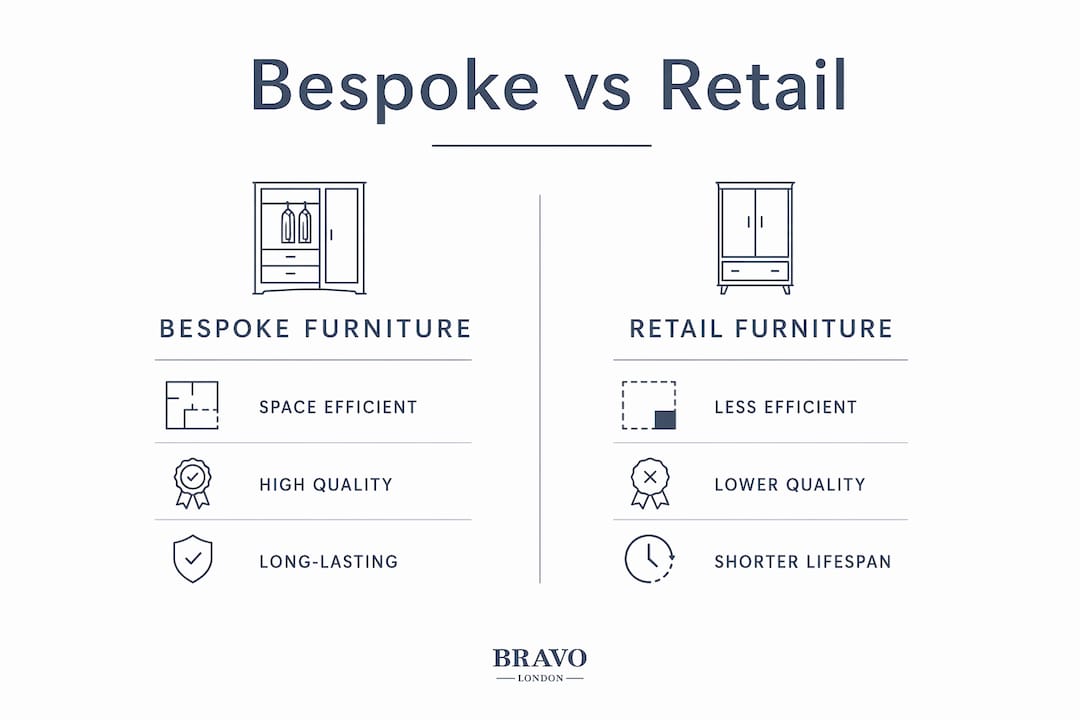
Retail furniture is designed to fit most rooms adequately. Bespoke furniture is designed to fit your room perfectly. The gap between those two outcomes is visible in the finish, the proportions, and the way a room feels when everything is in its right place.
The key differences between bespoke and retail furniture include:
- Materials: Bespoke pieces use solid hardwood, natural stone, and rare veneers. Retail pieces frequently use MDF, particleboard, and low-grade laminates.
- Craftsmanship: Bespoke joinery is built by skilled makers to exact tolerances. Retail furniture is assembled from standardised components.
- Repairability: Bespoke natural materials can be refinished and adapted over time. Mass-market veneer furniture must be discarded when damaged.
- Lifespan: Bespoke furniture lasts 15–25 years, compared to 3–5 years for retail pieces that fail under everyday use.
- Design integration: Bespoke pieces are architectural interventions. They work with your home's proportions, not against them.
Pro Tip: When comparing quotes, ask suppliers to specify the core material used in carcass construction. Solid wood or plywood carcasses signal genuine quality. MDF-only construction signals a retail-grade product at a bespoke price.
How does bespoke furniture improve functionality and space?
Buyers do not just buy square footage. They buy usable square footage. A room with a poorly placed chimney breast, a sloped ceiling, or an awkward alcove reads as wasted space. Fitted furniture turns those liabilities into assets.
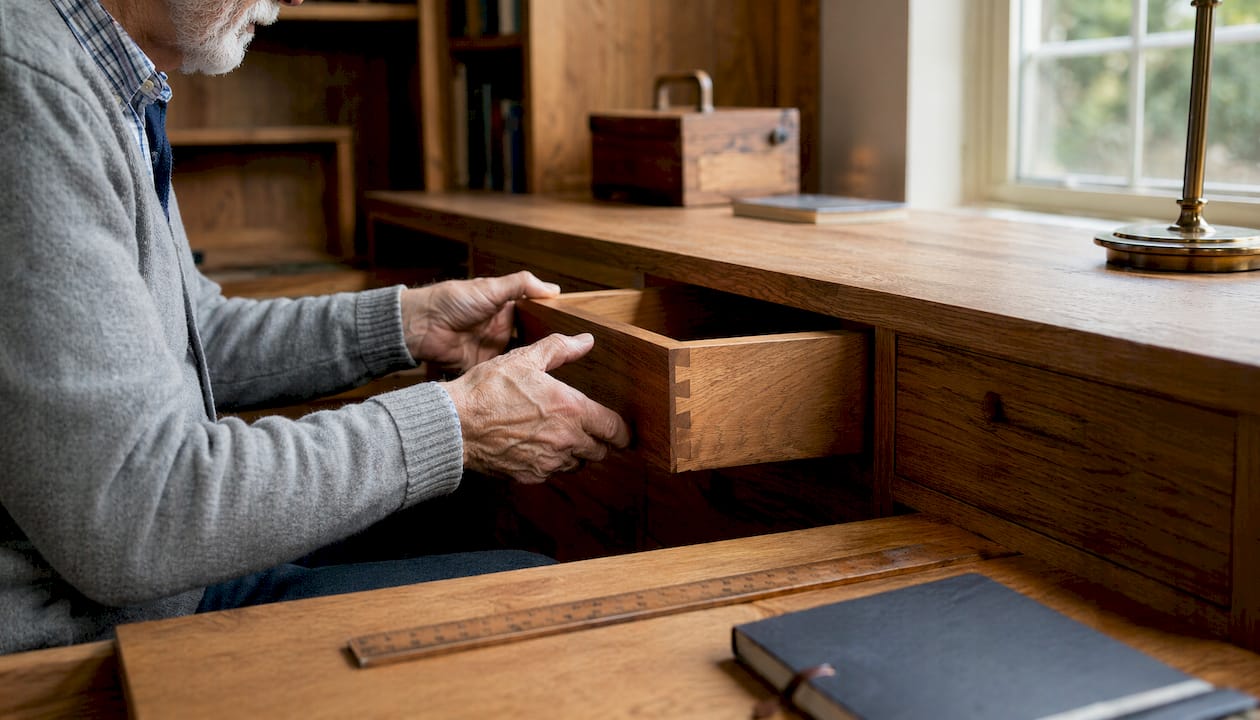
Bespoke furniture should be integrated early in a home project to solve spatial problems effectively, rather than being added as an afterthought. When a craftsman designs around a structural constraint from the outset, the result feels intentional and balanced. When furniture is added later to mask a problem, buyers can usually tell.
The most impactful applications for resale value include:
- Alcove shelving and cabinetry: Converts dead wall space into storage without reducing floor area.
- Fitted wardrobes: Eliminates the need for freestanding units that crowd bedrooms and reduce perceived room size.
- Built-in home office furniture: Addresses the growing buyer demand for dedicated, functional workspaces.
- Under-stair storage: Transforms a structural necessity into a design feature.
- Bathroom cabinetry: Creates a hotel-quality finish that buyers associate with premium properties.
For homeowners with furniture for awkward spaces, the value uplift is particularly clear. A room that previously felt unfinished becomes a selling point.
Pro Tip: Commission bespoke pieces before you list your home, not during viewings. Buyers need to see the finished result, not imagine it.
The table below shows how fitted and freestanding furniture compare across the factors that matter most to buyers.
| Factor | Fitted bespoke furniture | Freestanding retail furniture |
|---|---|---|
| Space efficiency | Maximises every centimetre, including awkward areas | Leaves gaps, wastes corners, limits layout options |
| Visual finish | Integrated, architectural, intentional | Standalone, often mismatched with room proportions |
| Storage capacity | Floor-to-ceiling, fully planned | Fixed by manufacturer dimensions |
| Buyer perception | Move-in ready, premium, considered | Requires replacement or rearrangement |
| Longevity | 15–25 years with refinishing potential | 3–5 years before structural decline |
In what ways does bespoke furniture shape buyer psychology?
Buyers make decisions emotionally and justify them rationally. Bespoke furniture works on both levels. A fitted wardrobe with soft-close drawers and veneered finishes signals that the previous owner cared about quality. That signal reduces buyer hesitation and increases perceived value before a single price negotiation begins.
Bespoke joinery creates move-in ready solutions with planned storage, making homes feel finished, functional, and premium. That sense of completeness speeds up sales and strengthens offers. Buyers who do not have to plan their own storage are buyers who are more willing to pay.
The luxury real estate market makes this dynamic explicit. As designer Giovanni Soleti observes:
"Personalisation is the ultimate luxury in 2026 premium real estate. Bespoke millwork offers a competitive advantage by creating non-replicable environments that buyers cannot find anywhere else."
That non-replicability is the point. A buyer can purchase the same sofa from a catalogue. They cannot replicate a fitted library wall built to the exact dimensions of your drawing room. Uniqueness commands a premium, and bespoke interiors in luxury real estate are increasingly the feature that differentiates one property from another at the same price point.
The psychological benefits for buyers include:
- Certainty: Storage is planned and visible. Buyers do not have to guess whether their belongings will fit.
- Quality assurance: Solid materials and fine finishes communicate that the home has been maintained to a high standard.
- Emotional connection: A beautifully fitted room creates a feeling of home that a bare, neutral space cannot replicate.
What are the financial considerations of bespoke furniture?
The upfront cost of bespoke furniture is higher than retail. That is a fact, not a drawback, when you understand what you are paying for. Bespoke furniture typically costs 2–5 times more upfront than comparable retail pieces. Its lifecycle cost over decades, however, tends to be lower because it does not need frequent replacement and can be refinished rather than discarded.
A solid wood bespoke dining table designed for exact room dimensions costs £4,500–£7,000, compared to £1,500–£3,500 for retail options. The bespoke piece can last up to 100 years with proper care. The retail piece typically requires replacement within a decade.
| Cost factor | Bespoke furniture | Retail furniture |
|---|---|---|
| Upfront cost | Higher (2–5x retail) | Lower |
| Replacement frequency | Rarely, if ever | Every 3–5 years |
| Refinishing potential | Yes, multiple times | No |
| Resale contribution | Positive, adds perceived value | Neutral or negative |
| Heirloom potential | High with solid materials | Negligible |
Material integrity determines resale value more than price point. Pieces made from natural stone, solid hardwood, or rare veneers retain or appreciate over time. High-priced furniture made from inferior materials like MDF does not. This is the most common mistake homeowners make: paying a premium price for a product that uses budget-grade materials underneath a polished surface.
For homeowners thinking about long-term investment value, the calculation is straightforward. One well-made fitted wardrobe outlasts four or five retail alternatives and contributes to the home's sale price in a way that a freestanding unit never can.
Pro Tip: Ask for a material specification sheet before commissioning any bespoke piece. If the supplier cannot provide one, treat that as a warning sign.
You can also find practical guidance on interior upgrades that boost value when planning which rooms to prioritise for bespoke investment.
How to ensure bespoke furniture contributes to resale value
Not every bespoke commission adds value. Poorly timed or badly planned custom furniture can limit a home's flexibility and reduce its appeal. The following steps protect your investment.
- Clarify room function first. Customisation adds value only when it reinforces a well-understood room function with stable scale, light, and circulation patterns. Do not commission bespoke storage for a room whose purpose is still unclear.
- Prioritise material quality over price. Solid hardwood, plywood carcasses, and natural veneers retain value. MDF and particleboard do not, regardless of the finish applied.
- Match the architecture. Bespoke furniture that fights the proportions of a room reads as an error. Pieces that complement ceiling height, window placement, and floor material feel considered and add value.
- Involve your maker early. Expert furniture makers stress involving craftsmen at the design stage, not after decisions have been made. Early involvement means spatial problems are solved through the furniture, not around it.
- Avoid over-personalisation. Highly specific colour choices or unusual configurations may appeal to you but limit buyer appeal. Neutral, well-crafted designs with quality materials attract the widest audience.
- Commission before listing. Buyers need to see completed work. A room mid-installation creates uncertainty, not confidence.
Pro Tip: If you are unsure where to start, focus on bedrooms and living areas first. Fitted wardrobes and built-in cabinetry in these rooms deliver the clearest return in buyer perception and offer value.
Key takeaways
Bespoke furniture adds resale value by combining superior materials, precise fit, and architectural integration in ways that retail furniture cannot replicate, making homes more appealing and easier to sell.
| Point | Details |
|---|---|
| Material integrity drives value | Solid hardwood and natural veneers retain value; MDF-based pieces do not, regardless of price. |
| Lifespan outperforms retail | Bespoke furniture lasts 15–25 years versus 3–5 years for retail, reducing lifecycle cost. |
| Buyers respond to move-in readiness | Fitted storage removes buyer hesitation and supports stronger, faster offers. |
| Timing and planning matter | Commission bespoke pieces after room function is clear to avoid limiting flexibility. |
| Early involvement pays off | Involving craftsmen at the design stage produces better spatial outcomes and higher value. |
Bespoke furniture and resale value: what I have seen on the ground
After working with homeowners across hundreds of projects, the pattern is consistent. The properties that sell fastest and command the strongest offers are not always the largest or the most recently renovated. They are the ones that feel finished. Bespoke furniture is what creates that feeling.
The misconception I encounter most often is that bespoke is purely a luxury indulgence. Homeowners assume the cost is unjustifiable unless they are planning to stay for decades. The reality is different. A well-specified fitted wardrobe or a built-in library wall does not just serve you while you live there. It communicates quality to every buyer who walks through the door.
What I have also learned is that material choice matters more than most homeowners realise. Two fitted wardrobes can look identical in a photograph. One is built from solid oak with dovetail joints and soft-close mechanisms. The other uses MDF carcasses with foil-wrapped doors. A buyer who opens the drawers knows the difference immediately. That tactile quality is what justifies a higher offer.
The homes where bespoke furniture genuinely fails to add value share one characteristic: the furniture was commissioned without a clear understanding of the room's function or the buyer's likely expectations. Bespoke is not a universal solution. It is a precise one. Used with intention and quality materials, it is one of the most reliable ways to increase what your home is worth.
— Bravo
How Bravo London can help you add value through bespoke furniture
If you are considering bespoke furniture as part of a resale strategy, the quality of the maker matters as much as the design itself.
Bravo London specialises in fitted wardrobes and bespoke cabinetry designed to maximise storage, complement your home's architecture, and appeal to discerning buyers. With over 1,000 completed projects, a 10-year warranty, and a design process built around your specific space, Bravo London delivers the kind of craftsmanship that holds its value. Explore the full range of bespoke furniture solutions or book a free consultation to discuss how fitted joinery can work for your home and your sale price.
FAQ
Does bespoke furniture increase a home's resale value?
Bespoke furniture increases resale value when it uses quality materials, fits the room's architecture, and creates move-in ready storage that buyers find immediately appealing. Poorly planned or low-material-quality bespoke pieces can have a neutral or negative effect.
Is bespoke furniture worth the cost for homeowners planning to sell?
Bespoke furniture typically costs 2–5 times more upfront than retail alternatives but lasts 15–25 years and contributes positively to buyer perception and offer strength, making it a sound investment for most homeowners.
What types of bespoke furniture add the most resale value?
Fitted wardrobes, built-in cabinetry, alcove shelving, and home office joinery consistently deliver the strongest return in buyer perception, particularly when they address awkward or underused spaces.
How does material choice affect the resale value of bespoke furniture?
Pieces made from solid hardwood, natural stone, or rare veneers retain or appreciate in value over time. Furniture built from MDF or particleboard, regardless of its finish, does not contribute meaningfully to resale value.
When should I commission bespoke furniture before selling my home?
Commission bespoke furniture once a room's function is clearly defined and well before you list the property. Buyers need to see completed, finished work to respond positively, not a room mid-installation.