TL;DR:
- Furniture customization involves designing pieces precisely to your space and needs, from measurements to finishes. Digital tools enhance accuracy and reduce errors during planning, leading to better results. Fully bespoke furniture offers long-lasting quality and personalization that standard options cannot match.
Furniture customisation is the process of adapting a piece precisely to your desired dimensions, materials, finish, and function, creating a solution built entirely around your space and needs. Unlike standard furniture, which forces you to compromise on size or style, the bespoke furniture process works from your requirements outward. It covers everything from the first site measurement to the final installation, with decisions made at every stage about wood species, joinery methods, surface finishes, and internal fittings. Understanding what does furniture customisation involve helps you plan realistically, set an accurate budget, and get a result that genuinely fits your home.
What does furniture customisation involve at the start?
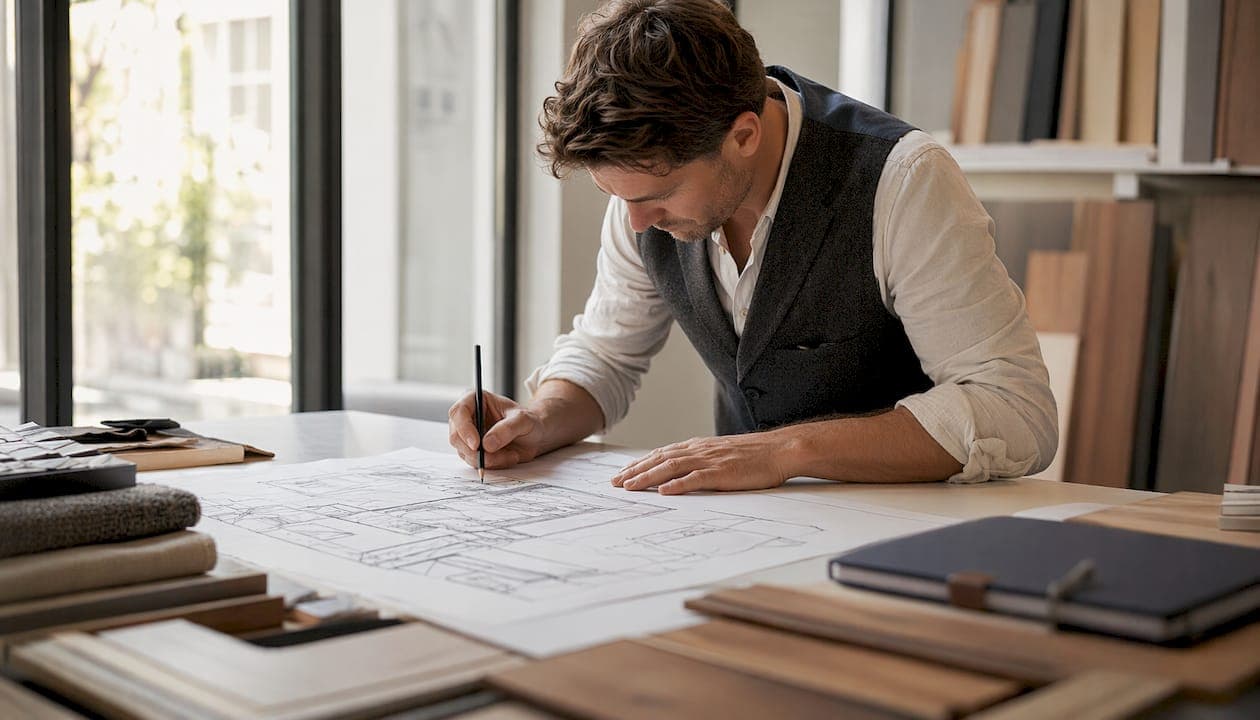
The customisation process begins with a thorough needs analysis and site survey. A designer or craftsman visits your space, takes precise measurements, and documents any constraints such as sloping ceilings, alcoves, or load-bearing walls. Getting this stage right determines everything that follows.
- Measure the space accurately. Record height, width, and depth at multiple points. Walls are rarely perfectly square, so measuring at floor, mid-point, and ceiling level catches discrepancies early. Proper clearance allowances, such as adding 2–4 inches around sofas and seating, are critical to comfort and function.
- Define your functional requirements. Decide what the piece must do before deciding how it should look. A fitted wardrobe needs hanging rails, shelving ratios, and drawer depths specified before any aesthetic choices are made.
- Establish your style preferences. Collect reference images, note finishes you admire, and identify any existing furniture the new piece must complement.
- Apply design principles to the layout. Designers often use the golden ratio (approximately 1:1.618) to set proportions that feel balanced without conscious effort. Seat height plus clearance formulas produce ergonomically correct pieces.
- Produce rough sketches and, where needed, physical prototypes. A cardboard mock-up of a cabinet door or drawer front costs almost nothing and prevents expensive mistakes later.
Pro Tip: Before your first consultation, photograph the space at different times of day. Lighting conditions affect how finishes and colours read in a room, and sharing these images with your designer saves revision rounds.
What materials and craftsmanship go into custom furniture?
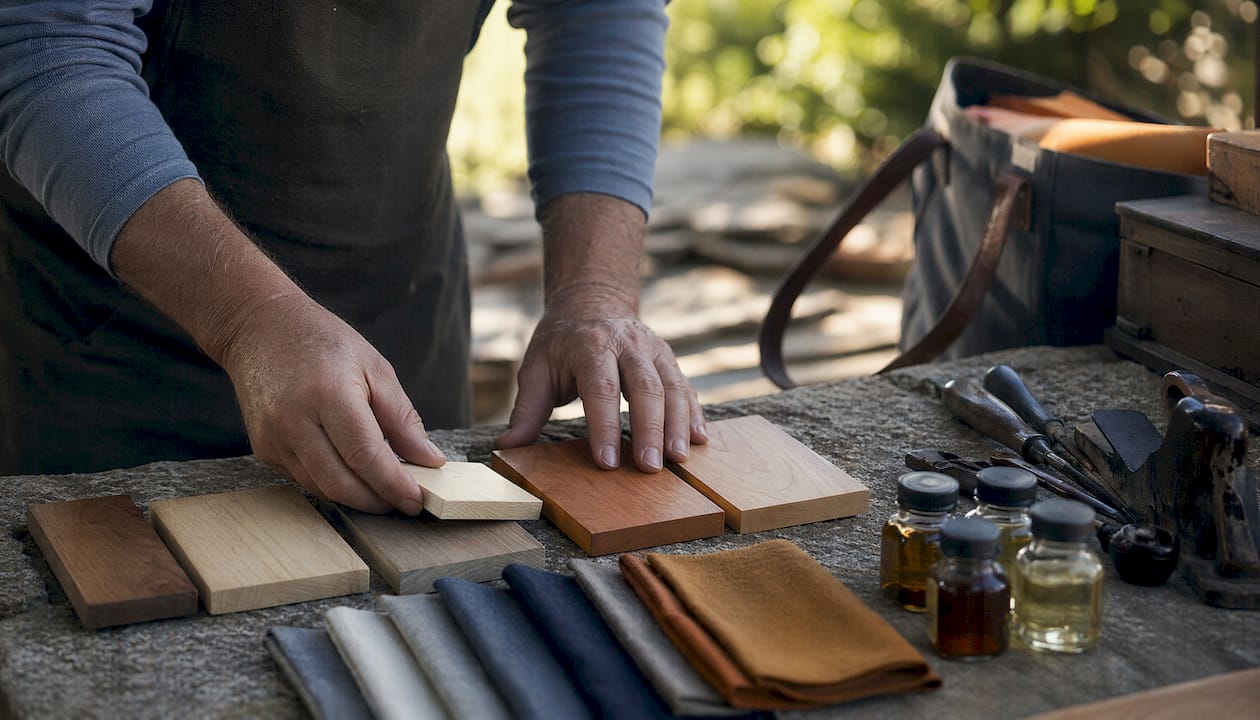
Material selection is where quality is either built in or compromised. The choice of wood species, board grade, fabric, and hardware directly affects how long a piece lasts and what it costs.
Wood species and board grades
Solid hardwoods such as oak, walnut, and ash offer natural grain character and long-term durability. Engineered boards, including moisture-resistant MDF and veneered plywood, provide dimensional stability and a consistent surface for painted or lacquered finishes. The grade of board matters: furniture-grade plywood uses more plies and fewer voids than construction-grade, which translates directly into stronger joints and cleaner edges.
Joinery methods and their strength implications
Joinery is the single biggest factor separating heirloom-quality furniture from flat-pack alternatives. Mortise-and-tenon joinery holds approximately five times better than simple butt joints. Professional-grade dovetails can withstand 300–500 lbs of shear force, making them the standard choice for drawer boxes that will see daily use. Pocket-hole joinery is faster and suits painted carcasses where the joint will not be visible, but it offers less long-term strength than traditional methods.
| Joinery method | Strength | Best application |
|---|---|---|
| Mortise-and-tenon | Very high | Chair legs, table frames, door frames |
| Dovetail | Very high | Drawer boxes, cabinet corners |
| Pocket hole | Moderate | Internal carcass panels, painted pieces |
| Butt joint | Low | Lightweight shelving, temporary structures |
Pro Tip: Always test joinery on scrap wood before cutting your final components. Wood movement and grain direction affect how joints seat, and a test run catches fit issues before they appear in the finished piece.
Finishing techniques complete the material story. Oil and wax finishes penetrate the wood grain, feeding the timber and producing a tactile, natural surface. Lacquer and paint create a hard film on top of the surface, offering greater resistance to moisture and abrasion. Veneered finishes allow rare or expensive timbers to be used economically across large panel surfaces. Each choice affects the visual result, the maintenance requirement, and the price.
Bespoke furniture pieces can command price premiums up to five times higher than mass-produced kits. That premium reflects the combined cost of quality materials, skilled labour, and the time invested in precise joinery and finishing.
How do digital tools improve the customisation process?
Digital design tools have changed how clients and craftsmen communicate. What once required multiple site visits and hand-drawn revisions now happens faster and with far greater accuracy.
- 3D modelling software translates your measurements and style preferences into a visual plan you can review before any cutting begins. Tools like SketchUp allow designers to export accurate cut lists directly from the model, reducing material waste and calculation errors.
- Photorealistic rendering places your chosen timber, fabric, or lacquer finish into a lifelike image of your actual room. You can compare a matt white lacquer against a warm oak veneer side by side before committing to either.
- Product configurators let you adjust dimensions, finishes, and internal fittings in real time, seeing the price update as you make changes. 3D product configurators now serve as an operational backbone for furniture brands, enabling scalable customisation with fewer errors.
- Digital approval drawings lock in every specification before production starts. Accurate 3D shop drawings reviewed and approved before manufacturing are the standard method for translating complex bespoke designs into physical form with high fidelity.
Digital tools reduce errors in custom furniture production by around 50%, which means fewer costly revisions and a final piece that matches what you approved. That accuracy also reduces returns and the frustration of receiving something that does not match your expectation.
What happens during production, finishing, and installation?
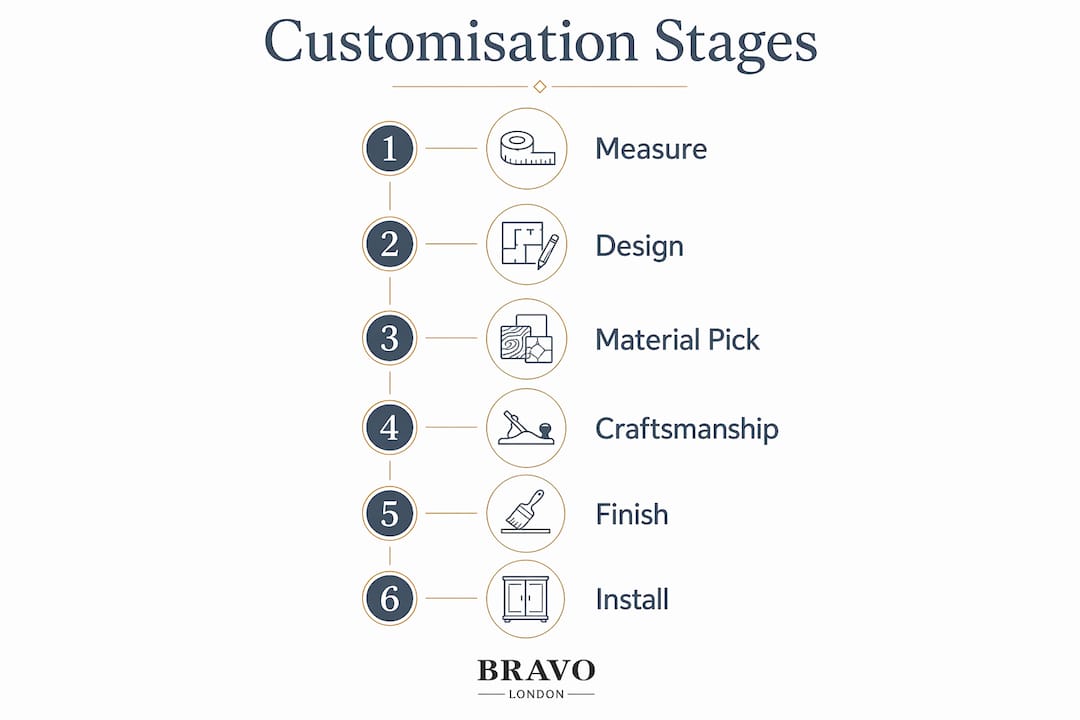
Once you approve the design drawings, production begins. Custom furniture manufacturing moves through a defined sequence: material cutting, frame construction, assembly, sanding, upholstery where applicable, and final inspection.
- Material cutting. Panels and components are cut to the approved dimensions using CNC machinery or hand tools, depending on the workshop and the complexity of the design.
- Frame construction and assembly. Joints are cut, fitted, and glued. Clamps hold the assembly square while adhesive cures. This stage determines the structural integrity of the finished piece.
- Sanding and surface preparation. Each surface is sanded through progressively finer grits to remove tool marks and open the grain evenly for finishing.
- Finishing. Oil, lacquer, paint, or veneer is applied in multiple coats with sanding between layers. This stage is where the visual character of the piece is established.
- Quality control inspection. The finished piece is checked against the approved drawings for dimensions, finish consistency, and mechanical function (drawers, hinges, soft-close mechanisms).
- Delivery and installation. Larger pieces are delivered in sections and assembled on site. The installer checks levels, adjusts feet or fixings, and fits any final hardware.
Pro Tip: Ask your maker for a pre-delivery inspection visit or a video walkthrough of the finished piece before it leaves the workshop. Catching a finish blemish in the workshop is far easier than addressing it after installation.
Potential installation challenges include walls that are out of plumb, floors that are not level, and pipework or electrical conduits hidden behind plasterwork. A professional installer surveys for these issues before fitting and uses scribing techniques to fit panels flush against uneven surfaces.
What are the main types of furniture customisation?
Custom furniture options exist on a spectrum from minor modifications to complete bespoke creation. Understanding where your project sits on that spectrum sets realistic expectations for cost, lead time, and the degree of personalisation you will achieve.
- Modified standard furniture. A manufacturer's existing design is altered in a limited way, such as changing the fabric, the finish colour, or a single dimension. Lead times are shorter and costs are lower, but design freedom is restricted.
- Semi-custom furniture. You select from a defined range of sizes, finishes, and internal configurations. This suits homeowners who want a better fit than standard but do not need a completely original design.
- Fully bespoke furniture. The piece is created entirely from scratch with no pre-existing template. Every dimension, material, joint, and fitting is specified to your requirements. This is the approach Bravo London takes across its fitted wardrobe and storage projects.
Common elements you can personalise across all three tiers include dimensions, upholstery fabric and colour, timber species or board finish, door style, handle and hardware selection, and internal fittings such as pull-out shoe racks, soft-close drawers, or integrated lighting. For ideas on how personalisation works in practice, the guide to custom made furniture for apartments covers decision-making in detail.
The main pitfall at this stage is underestimating lead times. Fully bespoke pieces typically require 6–12 weeks from design approval to installation. Budget accordingly, and avoid planning delivery around a fixed date without confirming the production schedule with your maker first. For a broader view of how personalisation choices affect home decoration budgets, the custom wallpaper pricing guide from Walls Need Love offers a useful parallel from another bespoke home product category.
Key takeaways
Furniture customisation delivers the best results when you understand each stage of the process, from precise measurement and material selection through to joinery, digital approval, and professional installation.
| Point | Details |
|---|---|
| Start with precise measurement | Measure at multiple heights and account for clearance to avoid costly fit issues. |
| Joinery defines durability | Mortise-and-tenon and dovetail joints far outlast butt joints in daily-use furniture. |
| Digital tools reduce errors | 3D modelling and configurators cut production errors and align expectations before manufacturing begins. |
| Know your customisation tier | Modified, semi-custom, and fully bespoke options differ significantly in cost, lead time, and design freedom. |
| Budget for the full process | Material quality, skilled labour, and finishing all contribute to the price premium of custom over mass-produced furniture. |
Why I always recommend going fully bespoke when the space demands it
After working through over 1,000 projects at Bravo London, the pattern is consistent. Homeowners who choose modified standard furniture to save money often return within a few years because the piece never quite worked. The wardrobe that was 50mm too shallow. The storage unit that could not reach the ceiling because no standard size fit the alcove. These are not minor inconveniences. They affect how a room functions every single day.
The collaboration between client and craftsman is where the real value of bespoke furniture lives. When you sit down with a designer who asks the right questions, who understands how you actually use a space rather than how you think you use it, the result is a piece that feels intentional and balanced. That feeling does not come from a product catalogue.
My practical advice: set your budget before your first consultation, not after. Knowing your ceiling figure allows a good designer to work creatively within it rather than presenting options you cannot afford. And build in a 10–15% contingency for material upgrades or design changes that arise once you see the 3D drawings. The fitted furniture versus ready-made comparison is worth reading before that first meeting. It frames the investment conversation clearly.
Trends change. A piece built to your exact space, in materials you chose, with joinery that will last decades, does not date in the same way a trend-led purchase does. Buy for your life, not for this year's interior mood board.
— Bravo
Bravo London's approach to bespoke furniture
Bravo London handles every stage of the customisation process in-house, from the initial site survey and 3D design through to manufacturing and installation. That single-source control means the measurements taken on day one are the measurements used in the workshop, with no translation errors between teams.
With over 1,000 completed projects and a 10-year warranty on all work, Bravo London brings the same level of care to a fitted wardrobe in a compact London flat as to a full-room storage scheme in a larger property. If you are ready to move from browsing to building, the bespoke furniture range covers the full scope of what is possible. For a personalised consultation, contact Bravo London directly and bring your measurements, your reference images, and your questions.
FAQ
What is the difference between customised and bespoke furniture?
Customised furniture involves limited changes to an existing design, such as altering fabric or finish. Bespoke furniture is created entirely from scratch with no pre-existing template, offering complete design freedom.
How long does the furniture customisation process take?
Fully bespoke pieces typically require 6–12 weeks from design approval to installation, depending on complexity and the maker's production schedule.
Why does custom furniture cost more than standard furniture?
Bespoke pieces command premiums up to five times higher than mass-produced equivalents because they use higher-grade materials, skilled joinery, and a production process built around your exact specifications.
What questions should I ask a furniture maker before commissioning a piece?
Ask about their joinery methods, finishing process, lead times, warranty terms, and whether they provide 3D drawings for approval before production begins. The homeowner's guide to fitted furniture companies covers this in full.
Can digital tools help me visualise my custom furniture before it is built?
Yes. Photorealistic 3D rendering and product configurators let you see your chosen materials and dimensions in context before any cutting begins, reducing production errors and aligning the final piece with your expectations.