
TL;DR:
- Asking detailed questions about materials, design, warranties, and installation helps ensure a quality fitted furniture project. Clear communication and transparency from the company lead to better results and long-term satisfaction.
Asking the right questions to ask fitted furniture companies is the single most effective way to protect your investment before a single panel is cut. Bespoke joinery, the industry's standard term for custom built-in furniture, covers everything from fitted wardrobes to floor-to-ceiling storage units designed around your exact space. The difference between a project that feels intentional and one that disappoints almost always comes down to what you asked, and when you asked it. Bravo London has completed over 1,000 projects and backs every piece with a 10-year warranty, which reflects what a credible company should be prepared to offer and defend.
1. What materials and hardware should I ask about?
Material quality determines how your furniture performs over years, not just how it looks on the day of installation. Ask specifically about the wood species or panel type used in the carcass, the substrate beneath any veneered or painted finish. MDF, moisture-resistant MDF, and solid timber each behave differently in humid rooms like bedrooms near en suites or fitted bathroom furniture.
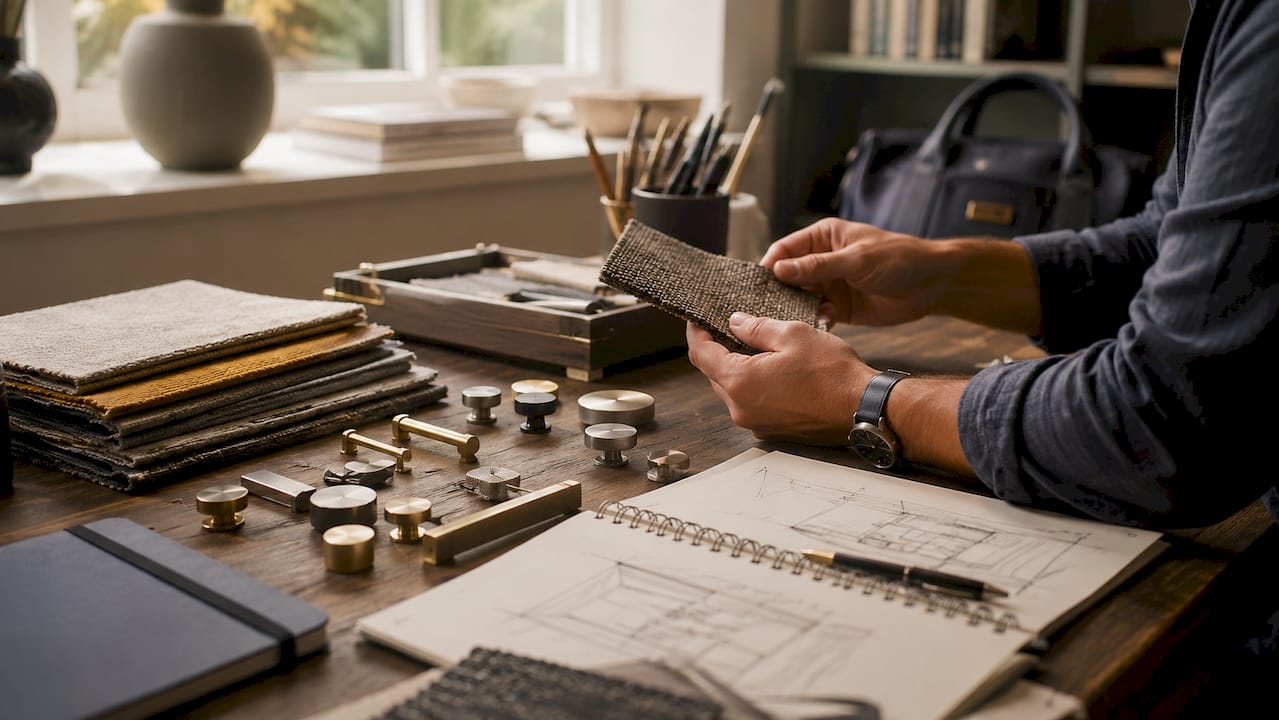
VOC and formaldehyde emission certificates for panels and finishes are standard practice to request in 2026. These certificates confirm the materials meet recognised air-quality standards, which matters particularly in bedrooms where you spend eight hours a night. A company that cannot produce these documents is cutting corners somewhere.
Hardware brands are equally telling. Blum and Hettich are widely recognised quality indicators for drawer runners, hinges, and soft-close mechanisms, and both offer manufacturer warranties on their components. Asking which hardware brand a company uses tells you immediately whether they are building to last or building to a price.
One detail most homeowners miss: ask whether internal surfaces are finished. Unfinished inner surfaces are a common cost-cutting practice that causes moisture imbalance and warping over time. The underside of shelves and the interior of apron panels should be sealed, not left raw.
- What panel type and wood species are used in the carcass?
- Can you provide VOC or formaldehyde emission certificates?
- Which hardware brands do you specify, and are they covered by a manufacturer warranty?
- Are internal surfaces finished to prevent warping?
Pro Tip: Request a physical sample of the panel and finish before signing any contract. A confident maker will send one without hesitation.
For a deeper look at wardrobe material durability, the factors that separate a ten-year piece from a two-year one are worth understanding before you commit.
2. How does the design and customisation process work?
The word "bespoke" is used loosely in the fitted furniture market. True bespoke means every dimension, finish, and internal configuration is designed around your specific space and needs. Modular systems, by contrast, use fixed-size units arranged to approximate a fit. Ask directly which approach the company uses, because the answer affects both quality and price.
A credible company offers a structured design consultation before any work begins. This should include measured drawings, material samples, and ideally a rendered visual of the finished piece in your room. Ask whether adjustments are possible after the initial design is agreed, and how many revision rounds are included.
Communication at key build stages, such as material selection, assembly progress, and finishing, is a strong predictor of project satisfaction. A company that goes silent between order and delivery is one that manages problems poorly. Ask how updates are delivered and how frequently.
- Is the furniture truly bespoke or modular?
- What does the design consultation include, and are revisions allowed?
- How will you communicate progress during the build?
- What is the expected lead time, and how are delays handled?
Pro Tip: Ask whether the company offers a post-installation review visit. The best makers schedule one to check fit, adjust doors, and address any snags before closing the project.
Understanding how to work with a bespoke furniture designer helps you set realistic expectations and ask sharper questions during your first consultation.
3. What warranty and aftercare policies should I verify?
Warranty terms reveal how much confidence a company has in its own work. Industry leaders benchmark warranties at 3–10 years on structural defects and finishes. A company offering less than five years on a bespoke piece is worth questioning. Bravo London's 10-year warranty sits at the top of that range for good reason.
Ask exactly what the warranty covers. Structural defects and finish failures should be included as standard. Normal wear and tear, such as minor surface scuffs from daily use, is typically excluded, and that is reasonable. What you need confirmed is that the company will repair or replace components that fail due to workmanship or material faults, not just cosmetic issues.
Aftercare logistics matter as much as the warranty period itself. Ask how you log a claim, what the response time is, and whether a technician visits or whether you are expected to return parts. Spare parts availability is also worth confirming, particularly for hardware components that may need replacing years down the line.
- What does the warranty cover, and for how long?
- How do I log a warranty claim, and what is the response time?
- Are spare parts available after the warranty period ends?
- What are the payment milestones, and are they tied to project stages?
Pro Tip: Ask for the warranty terms in writing before you sign the contract. Verbal assurances are not enforceable.
4. What installation and logistics questions should I ask?
Installation is where many fitted furniture projects go wrong, not because the furniture is poor, but because the logistics were not agreed in advance. Ask clearly who handles delivery and installation, whether that is an in-house team or a subcontractor, and whether installation fees are included in the quoted price.
Insurance coverage during transit and installation is a point many homeowners overlook entirely. If a panel is damaged in transit or a wall is marked during fitting, you need to know whose insurance covers the cost. A professional company carries public liability insurance and goods-in-transit cover as standard.
Site preparation is another area to clarify early. Ask whether the installation area needs any electrical, plumbing, or structural work before the team arrives. Skirting boards, coving, and uneven walls all affect how a fitted piece sits, and a good installer will survey the space before confirming the final design.
- Who carries out the installation, and is it an in-house team?
- Are delivery and installation fees included in the quote?
- Does the company carry public liability and goods-in-transit insurance?
- What site preparation is required before installation day?
Pro Tip: Confirm in writing that the installation team will protect your floors and walls during fitting. A professional crew arrives with dust sheets and takes them away clean.
5. How can I assess the credibility of a fitted furniture company?
Portfolio quality is the fastest credibility check available. Customer references and Google Reviews help validate both craftsmanship and service. Ask to see completed projects similar in scope to yours, and request contact details for two or three past clients if you want direct feedback.
Quality control processes separate consistent makers from inconsistent ones. Ask whether the company has a formal inspection protocol at the factory before pieces leave for installation. Production QC and defect management procedures are a reliable gauge of workmanship consistency. A company that cannot describe its QC process likely does not have one.
Responsiveness during the enquiry stage predicts responsiveness during the project. If emails go unanswered for days before you have even placed an order, that pattern will continue. Certifications and adherence to environmental or safety standards add another layer of assurance, particularly for families with young children or allergy concerns.
| Criteria | What to look for |
|---|---|
| Portfolio | Completed projects similar in scope and style to yours |
| References | Direct contact with past clients or verified reviews |
| Quality control | Formal factory inspection and defect management process |
| Communication | Prompt, clear responses at every enquiry stage |
| Certifications | Environmental, safety, and material compliance certificates |
| Warranty | Written terms covering structural defects for at least five years |
Understanding why bespoke fitted furniture represents a long-term investment helps you frame these credibility questions in the right context.
Key takeaways
Asking the right fitted furniture company questions before you commit protects your budget, your home, and your long-term satisfaction with the finished piece.
| Point | Details |
|---|---|
| Material transparency | Always request VOC certificates and ask whether internal surfaces are fully finished. |
| Hardware quality | Specify brands like Blum or Hettich as a benchmark for drawer and hinge quality. |
| Warranty in writing | Seek at least five years' coverage on structural defects, confirmed in your contract. |
| Installation logistics | Confirm insurance, site preparation needs, and whether the team is in-house. |
| Credibility checks | Request a portfolio, client references, and a description of the QC process. |
What I have learned from over 1,000 fitted furniture projects
Communication is the leading indicator of project success. Not the price, not the brochure, and not the showroom finish. When a company communicates clearly at every stage, problems get resolved before they become complaints. When communication is vague or delayed, small issues compound into disputes.
The question most homeowners forget to ask is about internal finishing. It sounds technical, but the answer is simple: are the surfaces you cannot see treated the same as the ones you can? Less meticulous makers leave raw panel interiors because it saves time and money. Over years, that shortcut causes warping, particularly in rooms with any humidity variation. A durable finish on all surfaces is not a luxury detail. It is the difference between furniture that lasts a decade and furniture that starts failing in three years.
Budget conversations are also worth having honestly. The goal is not to spend the least. The goal is to understand exactly what you are getting at each price point, and to make a decision with full information. A company that resists detailed questions about materials, warranties, or installation is one that benefits from your uncertainty. Ask anyway.
Trust is built through transparency, and transparency starts with the questions you ask before you sign anything.
— Bravo
Bravo London's approach to bespoke fitted furniture
Bravo London designs and builds bespoke fitted wardrobes and custom storage solutions for homeowners across London, with every project tailored to the exact dimensions and requirements of your space.
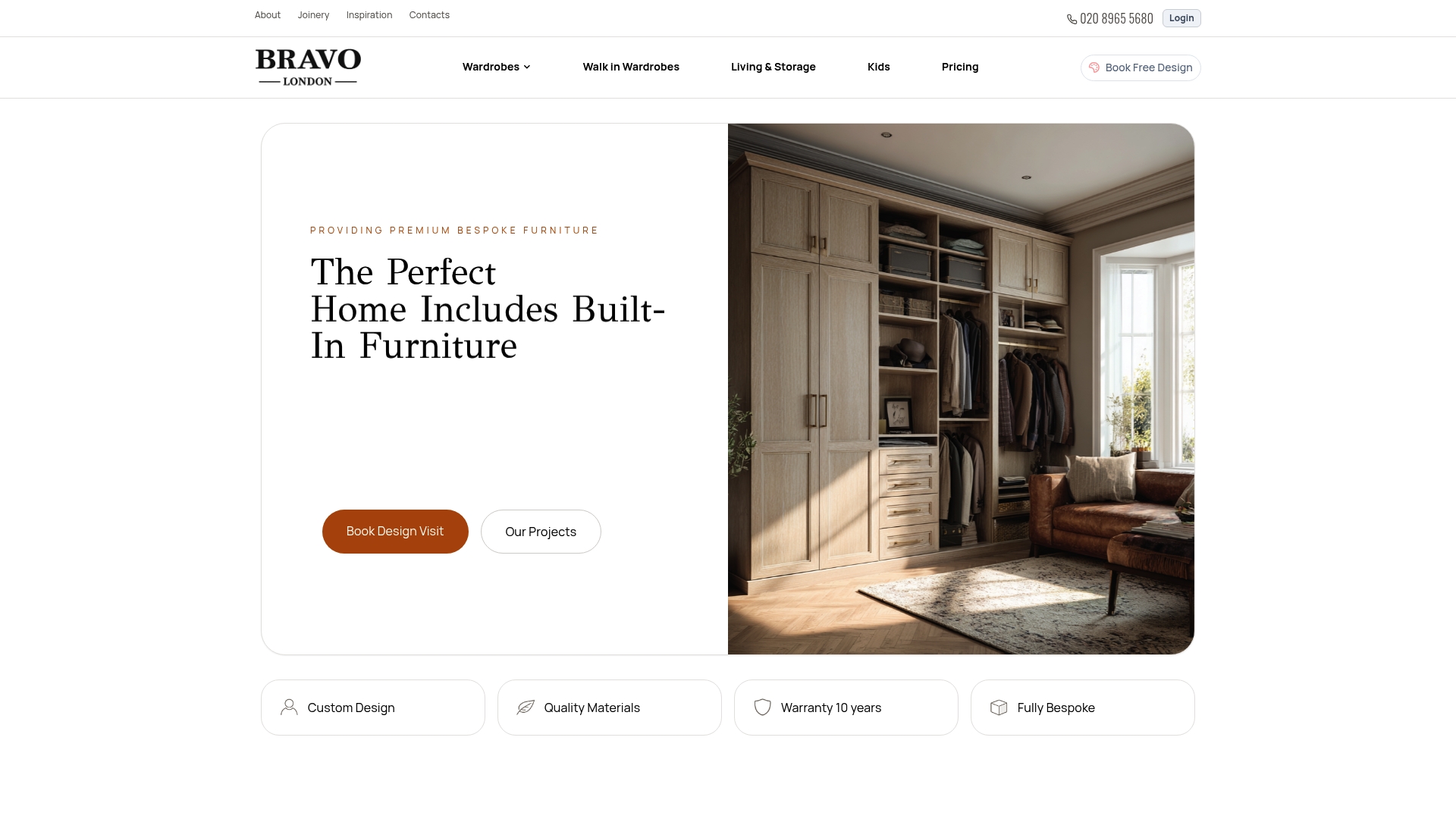
Every Bravo London project begins with a detailed design consultation, includes clear communication throughout the build, and is backed by a 10-year warranty on structural integrity and finish. With over 1,000 completed projects, the team brings the kind of experience that answers your questions before you have to ask them. If you are ready to see what bespoke cabinet furniture looks like when it is built to last, Bravo London is the place to start.
FAQ
What warranty should a fitted furniture company offer?
A credible fitted furniture company should offer a warranty of at least five years on structural defects and finishes, with industry leaders providing up to ten years. Always request the warranty terms in writing before signing any contract.
What is the difference between bespoke and modular fitted furniture?
Bespoke furniture is designed and built to the exact dimensions of your space, while modular systems use fixed-size units arranged to approximate a fit. Bespoke offers greater precision, better use of awkward spaces, and typically higher durability.
What questions should I ask about installation?
Ask who carries out the installation, whether fees are included in the quote, and whether the company holds public liability and goods-in-transit insurance. Confirm what site preparation is needed before the team arrives.
How do I verify a fitted furniture company's quality?
Request a portfolio of completed projects, ask for direct client references, and enquire about the company's factory inspection and quality control process. Verified reviews and material certifications add further assurance.
Should I ask about internal surface finishing?
Yes. Unfinished inner surfaces are a common cost-cutting practice that causes moisture imbalance and warping over time. Ask whether all surfaces, including shelf undersides and panel interiors, are sealed as part of the standard build.